

Apprentice Spotlight: Ana Cabrera on Phase Three and Her First Supervised Tattoos on Real Skin
Key Takeaways
Who Is Ana Cabrera?
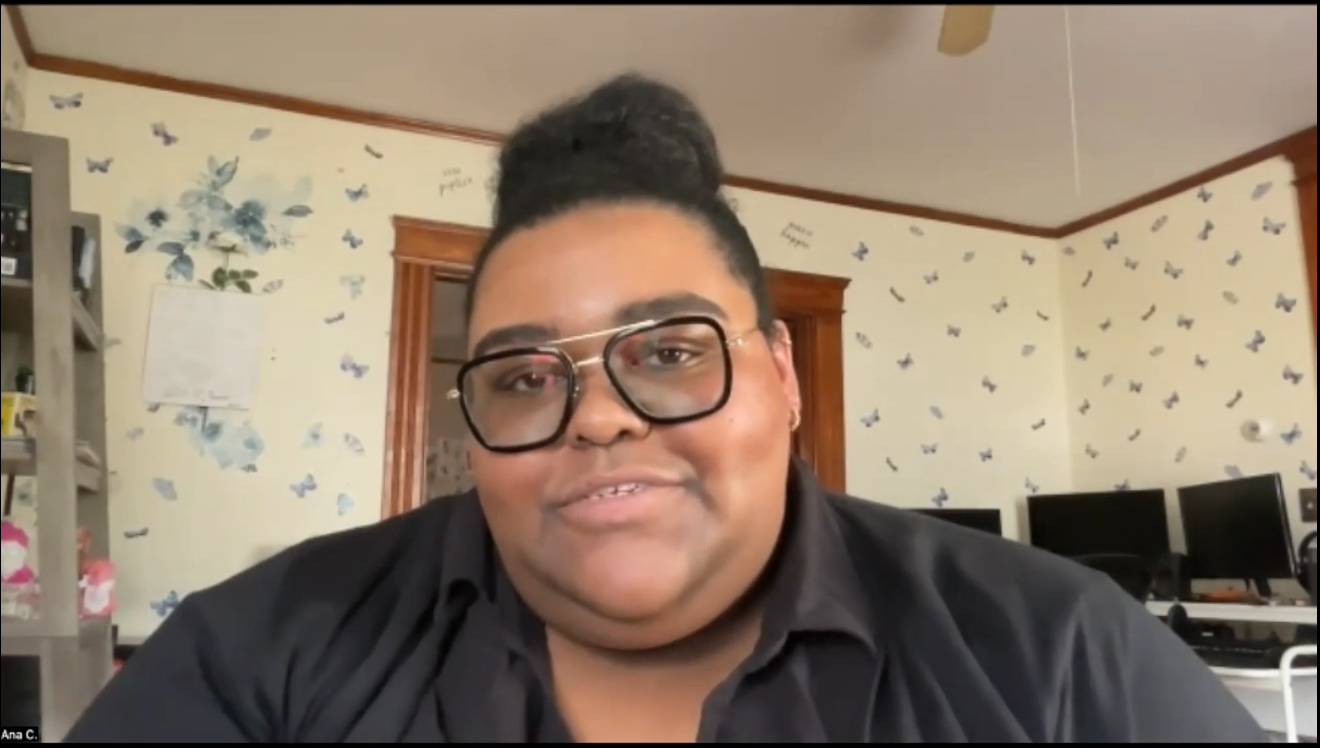
Ana Cabrera is a mostly self-taught artist who works as a court transcriptionist while she trains. She calls it “a quiet enough job” that gives her artistic ability “the capacity to bloom.”
Before tattooing, she worked as a case manager. She also has a master’s degree. That gives her a useful comparison: she says the payoff in skills has come much faster in her tattoo apprenticeship than it did in traditional college.
She credits that to her instructors’ “backbone of knowledge and the want to teach.” In college, she sometimes questioned her ability in isolation. Here, she says, she hasn’t had to.
What Is Phase Three in a Tattoo Apprenticeship?
Phase Three is when an Ink Different apprentice moves into a tattoo studio and begins doing supervised tattoos on real clients.
Here’s how the four phases of the Traditional Tattoo Apprenticeship build on each other:
- Phase One: Art and design, online. Apprentices learn to draw for tattooing in several styles.
- Phase Two: Machine work, online. Apprentices practice on synthetic skin to learn lines, depth, and machine control.
- Phase Three: Supervised tattoos on real clients in a tattoo studio, with a Mentor guiding the work.
- Phase Four: Working as a junior Tattoo Artist, charging for work, and preparing for licensing.
Safety is built into the training long before real skin, including the OSHA bloodborne pathogens standard.
How Did Ana Prepare for Her First Supervised Tattoos?
Ana prepared by working through Phases One and Two, including plenty of assignments she had to redo.
Phase One: learning the basics of tattoo design
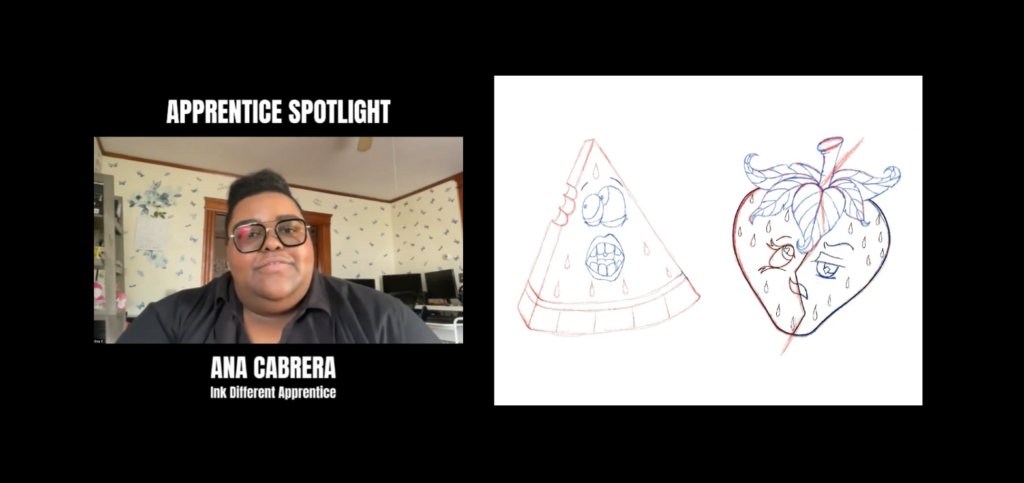
Ana’s first challenge was adjusting to the “bare bones” of tattoo design. She also caught herself “tripping over myself trying to force progress” instead of letting it happen. Comparing herself to classmates didn’t help, so she learned to trust the process.
Phase One also surprised her. She found an unexpected love for Japanese design, especially its vivid use of color.
Phase Two: learning the machine
Ana appreciated how structured the machine assignments were. But redoing them over and over could be frustrating. She reminded herself why it mattered: “It’s for the process, it’s for the progress.” Repetition, she realized, is how you learn to pull a proper line and understand depth.
She also learned to be realistic. Tiny details that look great on paper or an iPad don’t always work as tattoos. “You really have to consider what logistically makes sense and what doesn’t,” she says. That way, you don’t stress yourself out or overthink it.
Before you start, read about the mistakes aspiring tattoo apprentices should avoid.
Pro Tip: Ana’s advice for Phase Two is to treat every redo as training, not as failure.
What Was Her First Day on Real Skin Like?
Ana describes the move to real skin as a major learning curve.
Synthetic skin is flat and consistent. Real skin isn’t. Ana says the human body has many dips and contours, and depth works differently than it does on practice pads.
To handle that, she didn’t go in alone. She leaned on her Mentor to talk through each tattoo before the appointment. That preparation meant she wasn’t stressed when it was time to tattoo.
What Did Ana Learn That Fake Skin Never Taught Her?
Real skin taught Ana to adapt, plan ahead, and trust what she’d learned.
- Skin isn’t flat. The body’s dips and contours change how you approach every tattoo.
- Depth feels different. She had to learn safe needle depth all over again on real skin.
- Planning reduces stress. Talking through the design and approach ahead of time helped her stay calm.
- Success builds momentum. After her breakthrough, she started chasing that feeling with every tattoo.
Two of her favorite supervised pieces show what she’s built:
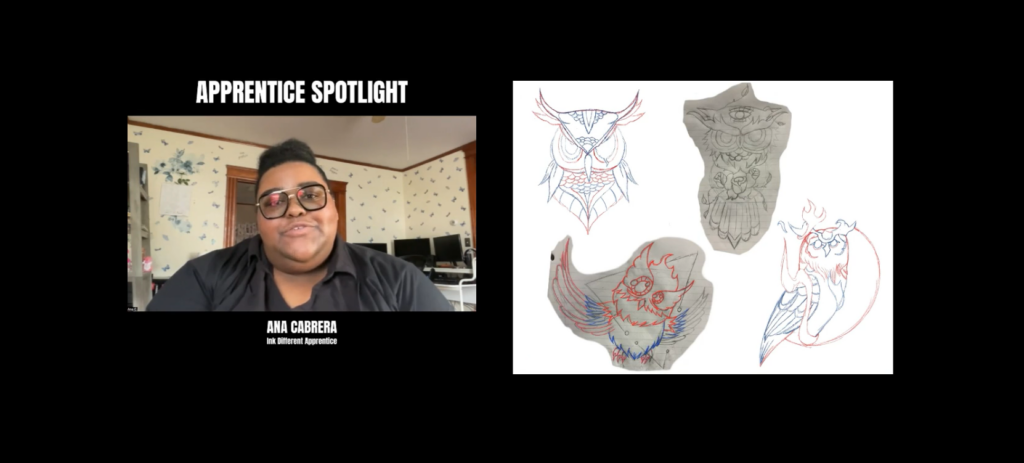
- A koi for Brandon, one of the permanent Tattoo Artists at her tattoo shop, designed to match the red and black already on his leg.
- A CatDog tattoo for a coworker and her friend, inspired by a show Ana loved growing up.
Tattooing is a human craft, which is why Tattoo Artists are still essential.
How Do Live Mentors Change Phase Three?
In Phase Three, a Mentor’s guidance is right there when you need it.
Ana leans heavily on her Mentor, Charmaine. They brainstorm approaches together, make sure Ana’s needle depth is safe, and prepare for each appointment ahead of time.
She also values learning from many instructors throughout the training. “Having an array of people is a lot more helpful than just having the one kind of brain to bounce off of,” she says, “because everybody’s approaches can be very different.”
That support is part of Ink Different’s “Good Humans” culture.
What Does Ana’s Story Mean for You?
It means real skin is earned step by step, and it’s okay to feel frustrated along the way.
Ana’s most valuable lesson is simple: “Take it one step at a time and breathe.” She’s honest that frustration is part of it. “As human beings, we do get frustrated. We do get antsy. We do have the feeling of wanting to quit at times.”
What got her through was patience, support, and trusting that every phase was preparing her for the next.
If you’re thinking about a career change, read why a tattoo apprenticeship is perfect for career changers.
What You Can Expect from Our Traditional Tattoo Apprenticeship?
Ink Different’s Traditional Tattoo Apprenticeship is an 18 to 24 month, four-phase tattoo apprenticeship that takes beginners to job-ready Tattoo Artists. Ink Different has trained Tattoo Artists for 15 years.
- Online foundations: Phases One and Two happen online, so you can train around work.
- In-studio training: Phases Three and Four take place in a tattoo studio under a Mentor’s supervision.
- Beginner-friendly: No prior art experience required.
- Licensing support: Guidance through your state’s requirements, like how to get your tattoo license in Texas.
- A guaranteed job offer: You’ll receive a guaranteed job offer at one of Ink Different’s own tattoo studios.
A Career That Comes With Confidence
This is a career that comes with confidence. You’ll finish with job-ready skills, licensing support, and a guaranteed job offer at one of Ink Different’s own tattoo studios. The Traditional Tattoo Apprenticeship is available at 60+ tattoo studios nationwide.
Mentorship That Pushes Your Brand and Skills Further
Once you’ve built your foundation, Ink Different’s Master Mentorship connects you with Master Mentors, including Al Fliction, Liz Cook, Kyle Dunbar, Boneface, Jordi Pla, Marcel Oliveira, and Kara Gutierrez.
Making Tattoo Training Accessible for Everyone
Ink Different offers Spanish-speaking locations in Denver, Orange County, NYC, Miami, San Antonio, and San Diego. Seats are limited, with only two apprentices per tattoo studio per Mentor.
Ready to Become a Tattoo Artist?
Ana Cabrera went from “bare bones” designs to supervised tattoos on real clients, one phase at a time. Next, she’ll step into Phase Four as a junior Tattoo Artist, ready to charge for her work.
Ready to become a Tattoo Artist? Apply now to Ink Different’s Traditional Tattoo Apprenticeship and start building an AI-proof career with licensing support and a guaranteed job offer at one of Ink Different’s own tattoo studios. You can also fill out our quick questionnaire to see if it’s right for you.
Frequently Asked Questions
When do apprentices start tattooing real skin?
In Phase Three of Ink Different’s Traditional Tattoo Apprenticeship, after the online art and machine phases.
What’s the biggest difference between synthetic and real skin?
Ana says real skin has many dips and contours, and depth works differently than on practice pads.
How did Ana prepare for supervised tattoos?
She talked through each tattoo with her Mentor, Charmaine, ahead of time, including the approach and safe needle depth.
What happens in Phase Four?
Apprentices work as junior Tattoo Artists, start charging for their work, and prepare for licensing.
How long is the full Traditional Tattoo Apprenticeship?
Ink Different’s Traditional Tattoo Apprenticeship takes 18 to 24 months across four phases, with licensing support and a guaranteed job offer at one of Ink Different’s own tattoo studios.
Do I need prior art experience?
No. The Traditional Tattoo Apprenticeship is built for beginners.
