

Tattoo Artist Requirements: Education, Licensing and Skills
Tattoo Artist requirements are the training, licensing and skills you need to tattoo clients legally and professionally. In most places, that means hands-on training through a tattoo apprenticeship, bloodborne pathogens safety training and whatever license or registration your state, county or city requires. You don’t need a college degree.
The tricky part is that requirements change from state to state. This guide breaks down the three pillars, education, licensing and skills, and links to our state-specific guides so you can find the rules where you live. At Ink Different Tattoos, we’ve spent 15 years guiding aspiring Tattoo Artists through every one of these requirements.
Key Takeaways
What are the requirements to become a Tattoo Artist?
To become a Tattoo Artist, you typically need hands-on training through a tattoo apprenticeship, bloodborne pathogens safety training, any license or registration your state requires, and solid artistic and technical skills.
Think of these requirements as the foundation of a house. Skip one and the whole structure gets shaky. You don’t need a four-year degree, but you do need real proof that you can tattoo safely and skillfully.
The three pillars are education (through a structured tattoo apprenticeship), licensing (which varies by state) and skills (the craft itself). Get these right and you have a career that’s hard to outsource or automate.
Remember: No one is born knowing how to tattoo. Every award-winning Tattoo Artist started as a beginner.
What education do you need to become a Tattoo Artist?
You don’t need a college degree to become a Tattoo Artist. Your education comes from a structured tattoo apprenticeship, where you learn drawing, safety and machine technique under an experienced Mentor.
This is where a lot of people get stuck. They assume they need years of expensive schooling. In reality, tattooing is a trade, learned the way craftspeople have always learned: by doing, under someone who has already walked the path.
A few states do set formal education requirements. Oregon, for example, requires an approved course of at least 360 hours, including 150 hours of practical tattooing, under Oregon Administrative Rules. The Oregon Health Licensing Office lists graduating from an Oregon-licensed tattoo career school as the main path to licensure.
For most aspiring Tattoo Artists, though, the tattoo apprenticeship is the education. That’s why tattoo apprenticeships are gaining ground as a solid alternative to college.
How do you get a tattoo license?
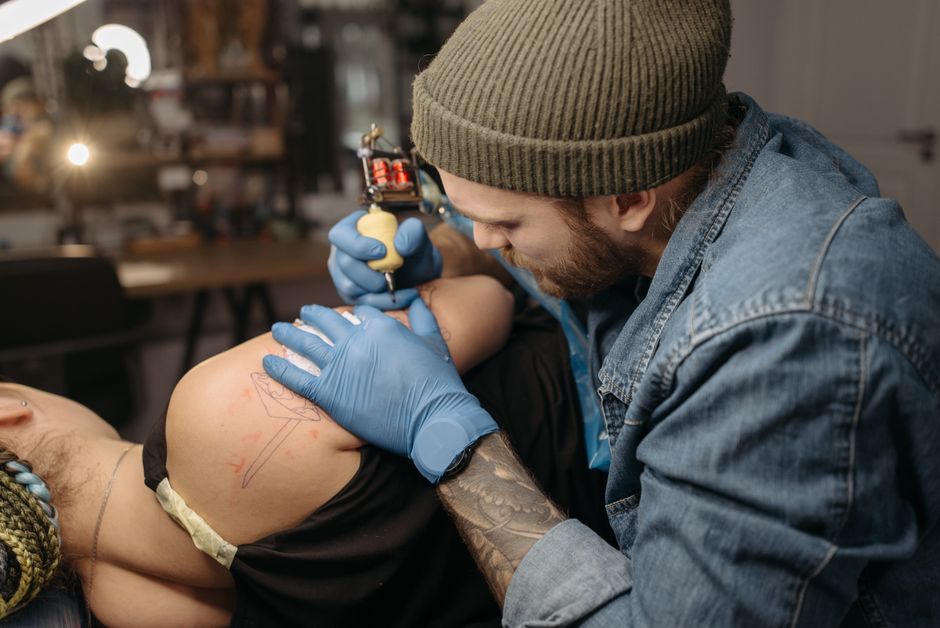
How you get a tattoo license depends on where you’ll work. Some states require supervised training hours, many require bloodborne pathogens training, and some leave licensing to counties or cities.
Here’s how much the rules can vary:
- Arkansas: State law has required at least 375 clock hours of supervised body art work and classroom training, according to the Arkansas Code. Applicants also need bloodborne pathogens training that meets OSHA requirements, per the Arkansas Department of Health rules.
- Oregon: Licensing runs through an approved course of at least 360 hours, as covered above.
- California: Practitioners complete bloodborne pathogens exposure control training before registering with their local enforcement agency, then update it every year. See the San Luis Obispo County body art requirements for an example, and read our guide to tattoo license requirements in California.
- Texas: The state licenses tattoo studios, and some cities add their own rules. Wichita Falls, for example, licenses individual body artists, who need current approved bloodborne pathogens training. Get the full process in our guide on how to get your tattoo license in Texas.
- Florida: The Florida Department of Health requires tattoo artist license applicants to complete a Department-approved Bloodborne Pathogen and Communicable Diseases course.
- Colorado: See how long it takes to get a tattoo license in Colorado.
Across nearly every state, safety training follows the OSHA Bloodborne Pathogens Standard. Always check with your state or local health department for the current rules where you plan to work.
Sorting through this paperwork alone can feel overwhelming. That’s one reason our tattoo apprentices lean on us: we provide licensing support, so you’re never guessing which form goes where.
What skills does a Tattoo Artist need?
A Tattoo Artist needs strong drawing fundamentals, steady machine control, strict hygiene habits, stencil and design skills, and confident client communication.
Talent helps, but skills are built. Here are the core abilities every working Tattoo Artist develops:
- Drawing and design: Line weight, shading, composition and turning ideas into tattooable art.
- Machine handling: Controlling depth, speed and pressure with your tattoo machine. Start with these tools every beginner Tattoo Artist should know.
- Hygiene and safety: Preventing cross-contamination and setting up a sterile station.
- Aftercare knowledge: Guiding clients with trusted resources like the American Academy of Dermatology’s tips for caring for tattooed skin.
- People skills: Listening, consulting and helping nervous clients feel at ease.
Beginners often hold themselves back before they even start. Save yourself the headache by reading about the mistakes aspiring tattoo apprentices should avoid.
How do you meet the requirements step by step?
Commit to training, find a qualified Mentor, master safety, build a portfolio, complete supervised work and apply for whatever license your state requires.
- Step 1: Check your state’s rules. Find out whether your state, county or city requires training hours, safety courses, registration or a license.
- Step 2: Enter a structured tattoo apprenticeship. Learn fundamentals the right way instead of piecing together online videos.
- Step 3: Master safety and sanitation. Complete bloodborne pathogens training and learn sterile station setup.
- Step 4: Build your portfolio. Draw daily, then move to synthetic skin and supervised work.
- Step 5: Complete supervised client work. Tattoo real clients under direct Mentor supervision.
- Step 6: Apply for your license or registration. Submit your training proof and certifications to the right state or local agency.
How long does it take to meet the requirements?
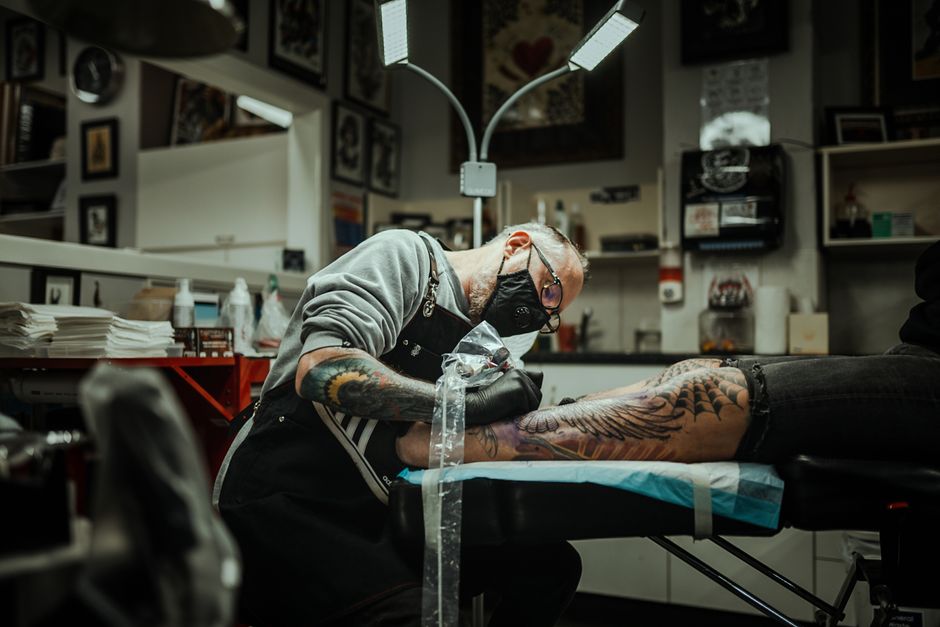
Meeting the full Tattoo Artist requirements usually takes one to three years through a tattoo apprenticeship. Ink Different’s Traditional Tattoo Apprenticeship takes 18 to 24 months, depending on your state and how quickly you progress.
That might sound long until you compare it to a four-year degree. In under two years, you can meet your state’s requirements and have the skills to earn income doing something you love.
How does Ink Different help you meet every requirement?
Ink Different Tattoos helps you meet every Tattoo Artist requirement through the Traditional Tattoo Apprenticeship. It runs 18 to 24 months across four phases, with in-person mentorship and licensing support.
For 15 years, we’ve trained professional Tattoo Artists across the country. You train in person with a Mentor at one of 60+ tattoo studios nationwide, with personalized, hands-on training the whole way through.
Here’s what you can expect:
- Great for beginners: No prior art experience is required. We teach you from the ground up.
- Four-phase structure: A clear progression from fundamentals to supervised practice and live client work.
- Licensing support: We guide you through your state’s specific requirements.
- A guaranteed job offer: You finish job-ready, with a guaranteed job offer at one of Ink Different’s own tattoo studios.
- Interest-free payment plans: Flexible payments make training more accessible.
Why is this career so resilient? Software can’t hold a tattoo machine or connect with a client’s story. Our article on why Tattoo Artists are still essential explains why.
You also join our “Good Humans” culture, a family-like community that has your back. You’re not lost in a crowd. You’re a tattoo apprentice with a guide.
What is the Master Mentorship program?
Master Mentorship is Ink Different’s one-year, in-person training path. You train directly with celebrity and award-winning Master Mentors to master a specific style, grow your brand and build toward owning your own tattoo studio.
You’ll learn from Master Mentors like Al Fliction, Liz Cook, Kyle Dunbar, Boneface, Jordi Pla and Marcel Oliveira. It’s intensive training focused on serious skill development and business growth.
Is tattoo training accessible if English is not your first language?
Yes. Ink Different offers Spanish-speaking locations in Denver, Orange County, New York City, Miami, San Antonio and San Diego.
Talent is everywhere, but opportunity isn’t always. Learning the craft in the language you’re most comfortable with helps close that gap.
Ready to Become a Tattoo Artist?
The requirements aren’t a mystery anymore. You know the education, licensing and skills it takes, and where to look up your state’s rules. The next step is training.
The career can be rewarding, too. According to ZipRecruiter, the average Tattoo Artist in the United States earns $106,858 a year as of November 2026. Each Mentor takes just two tattoo apprentices per tattoo studio, so seats fill up quickly.
Ready to become a Tattoo Artist? Apply now to Ink Different’s Traditional Tattoo Apprenticeship and start building an AI-proof career with licensing support along the way.
Frequently Asked Questions
Do you need a degree to become a Tattoo Artist?
No. Becoming a Tattoo Artist takes hands-on training, meeting your state’s requirements and building artistic skills, not a college degree.
Do all states require a tattoo license?
No. Requirements vary widely. Some states license individual Tattoo Artists, some focus on licensing tattoo studios, and others leave rules to counties or cities. Always check your local health department.
Do I need art experience to start a tattoo apprenticeship?
No. Ink Different’s Traditional Tattoo Apprenticeship teaches drawing fundamentals from day one, so complete beginners are welcome.
How long does it take to meet Tattoo Artist requirements?
Most tattoo apprenticeships take one to three years. Ink Different’s takes 18 to 24 months, depending on your state and how quickly you progress.
What certification do Tattoo Artists need for safety?
Many states require bloodborne pathogens training based on OSHA standards. It shows you can keep a sterile station and prevent cross-contamination.
What makes Ink Different different from other tattoo training?
Ink Different offers 15 years of experience, in-person mentorship, award-winning Master Mentors, licensing support, interest-free payment plans and a guaranteed job offer at one of its own tattoo studios.
