
Questions to Ask Before You Start a Tattoo Apprenticeship
Before you start a tattoo apprenticeship, ask your Mentor about their experience, how much hands-on teaching you’ll get, how long training takes and what you’ll learn at each stage. Also ask about safety training, licensing support, costs and the terms of your agreement. Clear, specific answers are a good sign. Vague or evasive ones are a red flag.
These questions protect your time, money and future. Below, we explain why each area matters, then give you a full checklist you can bring to any conversation with a potential Mentor.
Key Takeaways
What Is a Tattoo Apprenticeship, Really?
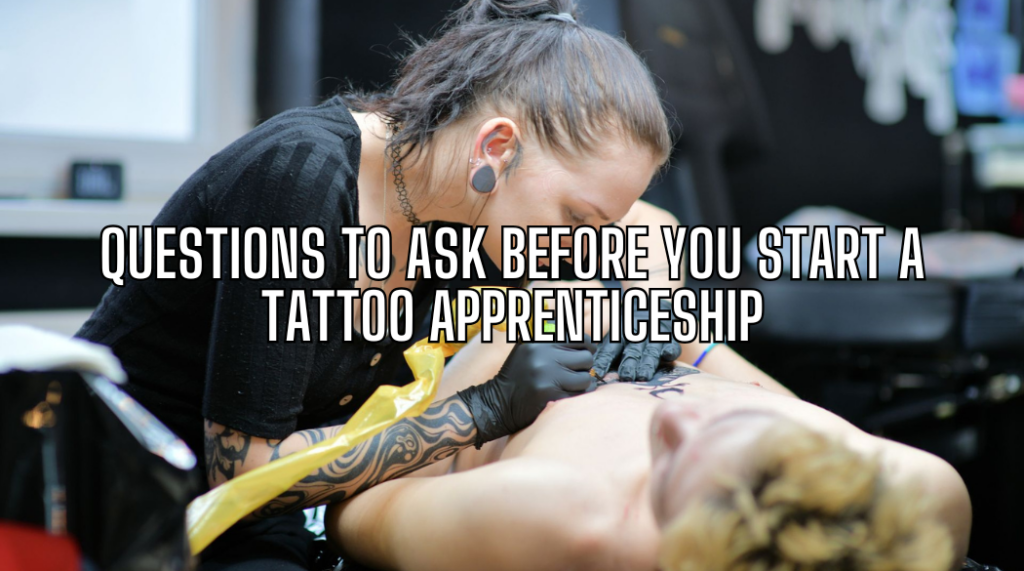
A tattoo apprenticeship is structured, hands-on training under an experienced Mentor. It moves from drawing and safety fundamentals to supervised client work, usually over one to three years.
Think of it like building a house. You don’t start by painting the walls; you start with the foundation. A good tattoo apprenticeship builds that foundation (drawing, machine handling, hygiene and client care) before you work on skin.
For many people, it’s a practical alternative to a four-year degree. Learn why tattoo apprenticeships are gaining ground as a solid alternative to college.
Who Will Actually Be Mentoring You?
Confirm exactly who your Mentor is, how long they’ve been tattooing and how much hands-on teaching time you’ll get. Your Mentor is the biggest factor in how fast you grow.
A great Mentor can save you years of trial and error. An absent one can leave you stuck doing tattoo studio chores with little real teaching.
Ask directly:
- Experience: How long have you been tattooing professionally, and what styles do you specialize in?
- Teaching time: How many hours of direct feedback will I get each week?
- Track record: Have you trained tattoo apprentices who now work professionally?
- Licensing: Are you licensed in this state, and can you serve as my sponsor if one is required?
Hands-on, in-person mentorship matters. Videos can’t teach your hand the pressure, angle and skin-reading a Mentor can correct in real time.
How Long Will the Tattoo Artist Training Take?
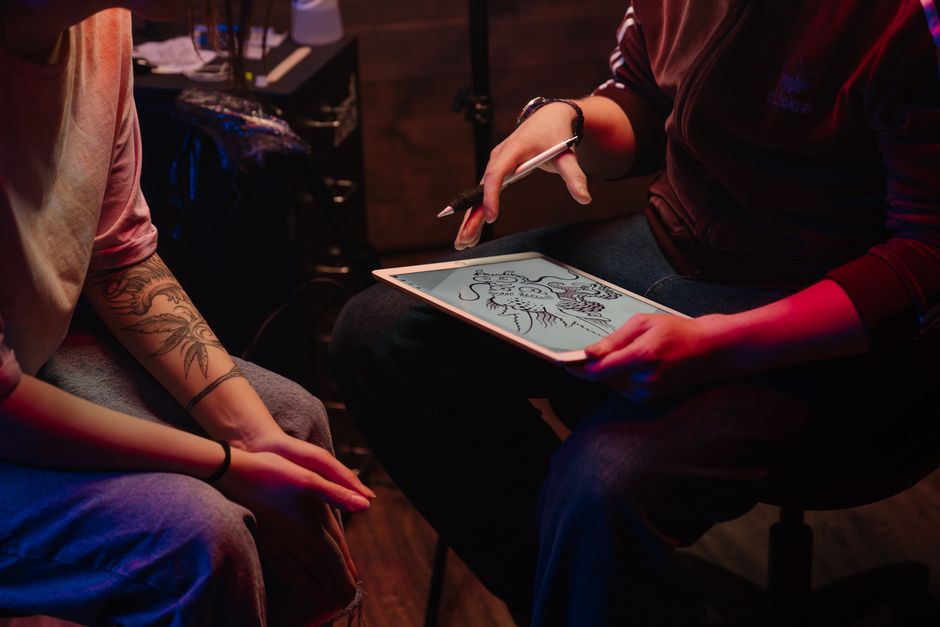
Most tattoo apprenticeships take one to three years. The best ones move through clear stages, from fundamentals to supervised client work.
Be cautious of two extremes. A promise to make you a pro in a few weeks is a shortcut that doesn’t exist. A tattoo apprenticeship with no structure can leave you doing chores for a long time without real progress.
State rules can also shape your timeline. In Oklahoma, for example, the 1,500 apprenticeship hours must be completed in no less than one year and no more than two years, according to the Oklahoma State Department of Health.
What Will You Actually Learn and Do?
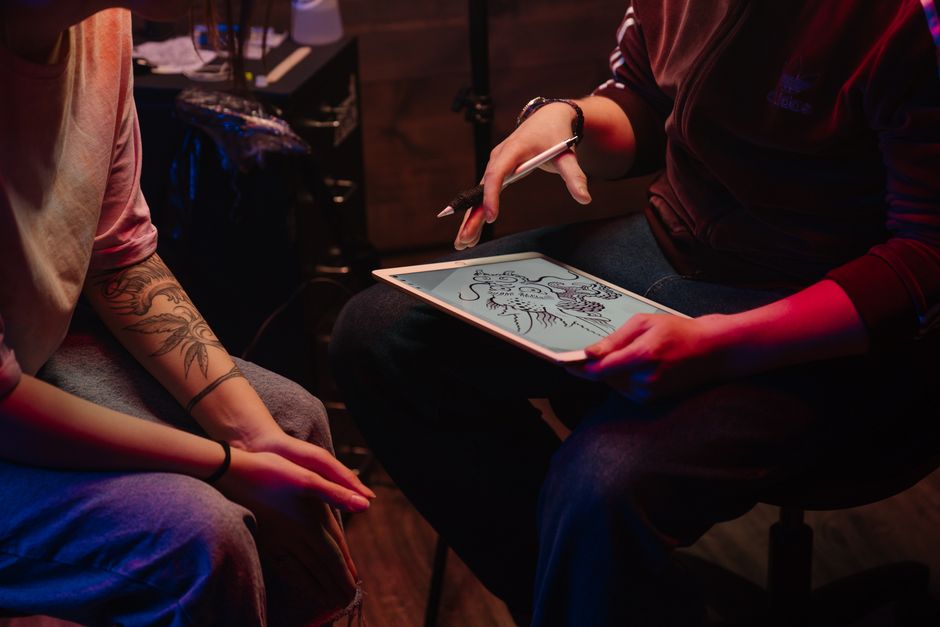
A real tattoo apprenticeship covers drawing fundamentals, machine control, sterile technique, client consultation, design feedback and supervised tattooing, not just cleaning.
Ask for a clear breakdown of what each stage covers and when you’ll move from observation to hands-on work. Get familiar with the tools every beginner Tattoo Artist should know, and read about the mistakes aspiring tattoo apprentices should avoid.
What Safety and Hygiene Standards Are Taught?
Any legitimate tattoo apprenticeship should teach bloodborne pathogens safety, cross-contamination prevention, sterilization and infection control before you work on a client.
The OSHA Bloodborne Pathogens Standard is the federal baseline for protecting workers from diseases spread through blood. Many states also require bloodborne pathogens training before you can tattoo. Good training also covers client aftercare, using resources like the American Academy of Dermatology’s tips for caring for tattooed skin.
Pro Tip: If a Mentor glosses over hygiene and safety, walk away. Clean technique is the backbone of a lasting career.
How Does the Program Help You Get Licensed?
Ask whether your training includes licensing support. Requirements vary by state, and getting them wrong can set you back.
In some states, the details matter a lot. In Oklahoma, apprentice hours only count when you work for your approved sponsoring Tattoo Artist at the establishment listed on the application, and hours earned before Department approval don’t count. That’s according to the Oklahoma State Department of Health.
Learn your state’s rules: how to get your tattoo license in Texas, tattoo license requirements in California and how long it takes to get a tattoo license in Colorado.
What Are the Exact Questions to Ask Before You Commit?
Use this checklist. Ask each question directly and judge the answers by how clear and specific they are.
Regarding your Mentor
- ☐ How long have you been tattooing professionally?
- ☐ What styles do you specialize in? Can I see your portfolio, including healed work?
- ☐ Have you trained tattoo apprentices before? What are they doing now?
- ☐ Can I talk to a current or former tattoo apprentice?
- ☐ Are you licensed in this state, and can you sponsor my tattoo apprenticeship if required?
About teaching and structure
- ☐ How many hours of hands-on teaching will I get each week?
- ☐ Is the tattoo apprenticeship divided into stages? What are the milestones?
- ☐ When will I start practicing on synthetic skin, and when on real clients?
- ☐ How do you give feedback on my work?
- ☐ How long do you expect the full tattoo apprenticeship to take?
About safety
- ☐ Will I complete bloodborne pathogens training, and does it meet my state’s requirements?
- ☐ How do you teach sterilization, setup and cross-contamination prevention?
- ☐ Will I learn client aftercare?
Regarding licensing
- ☐ What does my state require, and how will you help me meet it?
- ☐ Do I need to be registered before my hours count?
- ☐ Have past tattoo apprentices successfully gotten licensed?
About costs and terms
- ☐ What’s the total cost, and what does it include?
- ☐ Is there a payment plan or refund policy?
- ☐ What duties will I have outside of training?
- ☐ Will we put everything in a written agreement?
- ☐ Is there a non-compete clause?
About culture and logistics
- ☐ What’s a typical day like for a tattoo apprentice here?
- ☐ Where will hands-on training take place?
- ☐ What happens if I need to pause or leave?
A Mentor who welcomes these questions is usually a good sign. For broader guidance on judging any training program, the Federal Trade Commission’s guide to choosing a vocational school or certificate program suggests asking detailed questions and getting promises in writing.
On unpaid work, the U.S. Department of Labor’s Fact Sheet #71 explains that unpaid training at for-profit businesses should primarily benefit the trainee. This isn’t legal advice, but it’s a helpful lens.

Why Ink Different Checks Every Box
Ink Different Tattoos gives clear answers to these questions: a structured 18-to-24-month path, in-person mentorship, safety training, licensing support and a supportive “Good Humans” culture built over 15 years.
What You Can Expect From Our Traditional Tattoo Apprenticeship
Ink Different’s Traditional Tattoo Apprenticeship runs 18 to 24 months across four phases. You train in person with a Mentor at one of 60+ tattoo studios nationwide. No prior art experience is required.
- Phase 1, Art and Design Principles: Drawing, shading, digital design and building a portfolio.
- Phase 2, Machine Mastery and Practice Tattooing: Hand-control exercises, machine operation, lining, shading and color packing.
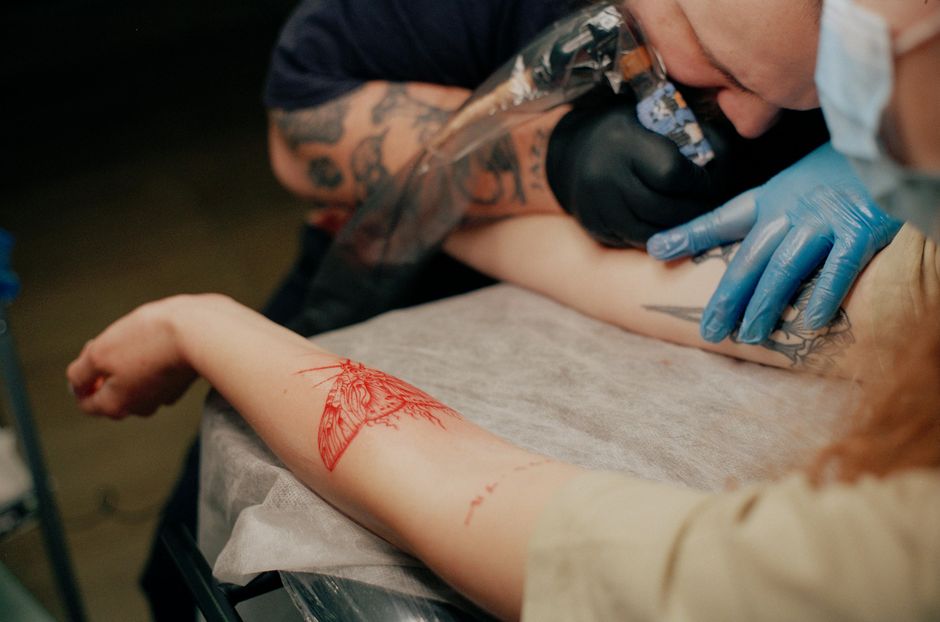
- Phase 3, Supervised Tattoos: Tattooing real skin under a Mentor’s direct supervision, after submitting a tattoo submission form.
- Phase 4, Junior Artist Externship: Building client relationships and refining your skills while you start earning.
- Interest-free payment plans: Flexible payments make training more accessible.
A Career That Comes With Confidence
You’ll finish with job-ready skills, licensing support and a guaranteed job offer at one of Ink Different’s own tattoo studios. Tattooing is a hands-on craft that’s hard to automate. Read why Tattoo Artists are still essential. According to ZipRecruiter, the average Tattoo Artist in the United States earns $106,858 a year as of November 2026.
Mentorship That Pushes Your Brand and Skills Further
Want to go further? Our one-year, in-person Master Mentorship lets you train alongside celebrity and award-winning Master Mentors, including Al Fliction, Liz Cook, Kyle Dunbar, Boneface, Jordi Pla and Marcel Oliveira. It’s built for beginners and experienced Tattoo Artists who want to master a style, grow their career or own a business.
Making Tattoo Training Accessible for Everyone
We offer Spanish-speaking locations in Denver, Orange County, New York City, Miami, San Antonio and San Diego, so language is never a barrier.
Ready to Become a Tattoo Artist?
Asking the right questions before you start a tattoo apprenticeship helps you choose a Mentor and a path you can trust. Each Mentor takes just two tattoo apprentices per tattoo studio, so seats fill up quickly.
Ready to become a Tattoo Artist? Apply now to Ink Different’s Traditional Tattoo Apprenticeship and start building an AI-proof career with licensing support along the way.
Frequently Asked Questions
What questions should I ask a tattoo Mentor?
Ask about their experience, how much hands-on teaching you’ll get, the timeline and stages, safety training, licensing support, costs and whether terms will be in writing.
What’s the biggest red flag when talking to a potential Mentor?
Vague answers about what you’ll learn, when you’ll start tattooing or what you’ll pay. A Mentor who won’t put terms in writing is another warning sign.
Do I need prior art experience to start?
No. Ink Different’s Traditional Tattoo Apprenticeship is built for beginners and starts with art and design principles.
How long is the Traditional Tattoo Apprenticeship?
It runs 18 to 24 months across four phases, with in-person training at a working tattoo studio.
Why does my Mentor’s license matter?
Some states require you to train under an approved, licensed sponsor for your hours to count toward a license. Oklahoma is one example.
Is tattooing really an AI-proof career?
Tattooing is hands-on work that depends on reading skin and building trust with clients in real time, which makes it hard to automate.
