


Do Tattoo Apprentices Get Paid? Paid vs Unpaid Apprenticeships Explained
Do tattoo apprentices get paid? Usually not, at least not at first. Most tattoo apprenticeships are unpaid during the early learning stages, and some require the apprentice to pay for training. Income typically starts later, once the apprentice is skilled enough to tattoo clients under supervision.
That’s very different from many other trades. In registered apprenticeships for fields like electrical work or plumbing, apprentices earn wages while they train. According to Apprenticeship.gov, 93% of registered apprentices keep their jobs after completing their apprenticeship, with an average starting salary of $86,000. Tattoo apprenticeships rarely work that way.
Below is a straight look at how tattoo apprentice pay really works on the tattoo studio floor: why so many tattoo apprenticeships are unpaid, the different arrangements you’ll run into, when income usually starts and how to judge an offer.
Key Takeaways
What Is a Paid Tattoo Apprenticeship?
A paid tattoo apprenticeship is one where you earn some income while you learn, through hourly pay, commission on supervised tattoos or tips. It’s the exception, not the rule.
In practice, “paid” can mean several different things:
- Hourly pay for tattoo studio work: A small wage for front-desk duties, cleaning and setup.
- Commission: A share of the price of tattoos you complete under supervision.
- Tips: Money you keep from clients once you’re tattooing.
Read the fine print before you commit. A position that pays hourly for front-desk work may involve far more desk duty than actual tattoo training. For context, ZipRecruiter reports that tattoo shop assistant roles average $34,745 a year, or about $16.70 an hour.
Do Tattoo Apprentices Get Paid?
Most tattoo apprentices don’t get paid during the early stages of training. Many begin earning once they move on to tattooing clients under their Mentor’s supervision.
The traditional tattoo apprenticeship has historically been unpaid. In some tattoo studios, apprentices pay their Mentor for training. Either way, early months typically go to drawing, cleaning, setup and watching your Mentor work.
Things change as your skills grow. Once you’re trusted with a tattoo machine and real clients, income from tips and commission usually starts. Long term, the earning potential is strong. According to ZipRecruiter, the average Tattoo Artist in the United States earns $106,858 a year as of November 2026, though pay varies widely with skill, reputation and location.

Why Are So Many Traditional Apprenticeships Unpaid?
Many tattoo apprenticeships are unpaid because Mentors invest months of one-on-one teaching, supplies and tattoo studio space before a tattoo apprentice brings in any income.
A Mentor is passing on years of hard-won skill, one-on-one. In the traditional model, a tattoo apprentice “paid” with time and labor: cleaning stations, preparing supplies and watching the craft for months before touching skin.
There’s a real cost side too. Practice equipment, needles, ink and synthetic skin all cost money, and the Mentor’s time spent teaching is time not spent tattooing paying clients.
Some states formally tie the tattoo apprentice to a specific Mentor. In Oklahoma, for example, apprentice hours only count when the apprentice works for their approved sponsoring Tattoo Artist at the establishment listed on the application, according to the Oklahoma State Department of Health. oklahoma
There’s a legal side as well. The U.S. Department of Labor’s Fact Sheet #71 explains how courts decide whether unpaid interns and students at for-profit businesses must be paid. The analysis turns on which party is the “primary beneficiary” of the relationship. In general terms, unpaid training should mainly benefit the trainee, not just supply free labor. This isn’t legal advice, so check your state’s rules if you have concerns. dol
Understanding this helps you spot red flags. Read about the mistakes aspiring tattoo apprentices should avoid before you evaluate any offer.
Watch out: If a tattoo studio asks for large fees but offers no clear structure, safety training or licensing support, be cautious. You should be paying for real mentorship, not just a spot in the corner.
What’s the Difference Between Paid and Unpaid Apprenticeships?
The main difference is timing. Unpaid tattoo apprenticeships delay income until you’re skilled enough to earn, while paid ones mix small earnings with training along the way.
Neither model is automatically better. What matters is what you get in return:
- Unpaid tattoo apprenticeship: No early income, often paired with hands-on mentorship and a path to taking clients.
- Paid tattoo apprenticeship: Rarer. It usually involves hourly tattoo studio work or commission, sometimes with less one-on-one teaching.
- Tuition-based training: You pay for structured training, often with defined stages and licensing support.
- Pay-the-Mentor arrangements: You pay a Mentor directly, and quality varies widely from tattoo studio to tattoo studio.
A good way to think about it: college students pay to learn, then earn later. That’s why tattoo apprenticeships are gaining ground as a solid alternative to college. You invest in training now for skills that pay off over a career.
How Can You Start Earning as a Tattoo Apprentice?
Progress through your training until your Mentor trusts you to tattoo clients. That’s usually when tips and commission begin.
- Step 1: Master the fundamentals. Build your drawing, linework and machine handling. No one pays for skills you don’t have yet.
- Step 2: Practice on synthetic skin. Prove you’re consistent and safe before working on real clients.
- Step 3: Learn safety and sanitation thoroughly. Study the OSHA Bloodborne Pathogens Standard and complete any training your state requires.
- Step 4: Take supervised clients. This is usually where income starts, through tips and commission.
- Step 5: Build your brand. Use these platforms to help new and aspiring Tattoo Artists build their brand so paying clients can find you.
Meanwhile, plan your finances. Many tattoo apprentices keep a part-time job or build savings to cover living costs during the early, unpaid stages.

What Should You Look for in a Tattoo Apprenticeship?
Look for structure, in-person mentorship, licensing support and job-ready skills, not just the tattoo apprenticeship that pays fastest.
When money is tight, it’s tempting to take the first paid offer. But a weak tattoo apprenticeship that leaves you undertrained costs more in the long run. Ask these questions before committing:
- Mentorship: Will you get real, hands-on teaching from skilled Tattoo Artists, or mostly cleaning duty?
- Structure: Is there a clear plan with defined stages?
- Pay and costs: What, exactly, will you pay or earn, and when? Get it in writing.
- Licensing: Will you get help meeting your state’s requirements? See how to get your tattoo license in Texas, tattoo license requirements in California or how long it takes to get a tattoo license in Colorado.
- Outcomes: Do tattoo apprentices finish job-ready?
- Culture: Will you be supported, or treated as free labor?
How Does Ink Different’s Apprenticeship Work?
Ink Different’s Traditional Tattoo Apprenticeship is structured training, not a paid position. It runs 18 to 24 months across four phases and takes beginners to job-ready, with licensing support along the way.
Instead of an income on day one, it’s built around a clear path to a long-term career. Tattooing depends on human skill and judgment, which is why Tattoo Artists are still essential as automation spreads.
Here’s what you can expect:
- In-person training: Learn with a Mentor at one of 60+ tattoo studios nationwide.
- Beginner-friendly: No prior art experience is required. We teach you from the ground up.
- Personalized, hands-on training: Real-time feedback from working Tattoo Artists.
- Licensing support and a guaranteed job offer: You finish job-ready, with help meeting your state’s requirements and a guaranteed job offer at one of Ink Different’s own tattoo studios.
- Interest-free payment plans: Flexible payments help you manage the cost of training.
Want a head start on equipment? See these tools every beginner Tattoo Artist should know.
Want to go deeper? Consider Master Mentorship.
Our one-year, in-person Master Mentorship lets you train alongside celebrity and award-winning Master Mentors, including Al Fliction, Liz Cook, Kyle Dunbar, Boneface, Jordi Pla and Marcel Oliveira. It’s built for mastering a specific style, growing your brand and working toward owning your own tattoo studio.
Making tattoo training accessible for everyone.
We offer Spanish-speaking locations in Denver, Orange County, New York City, Miami, San Antonio and San Diego. Our “Good Humans” culture means you join a supportive, family-like community.
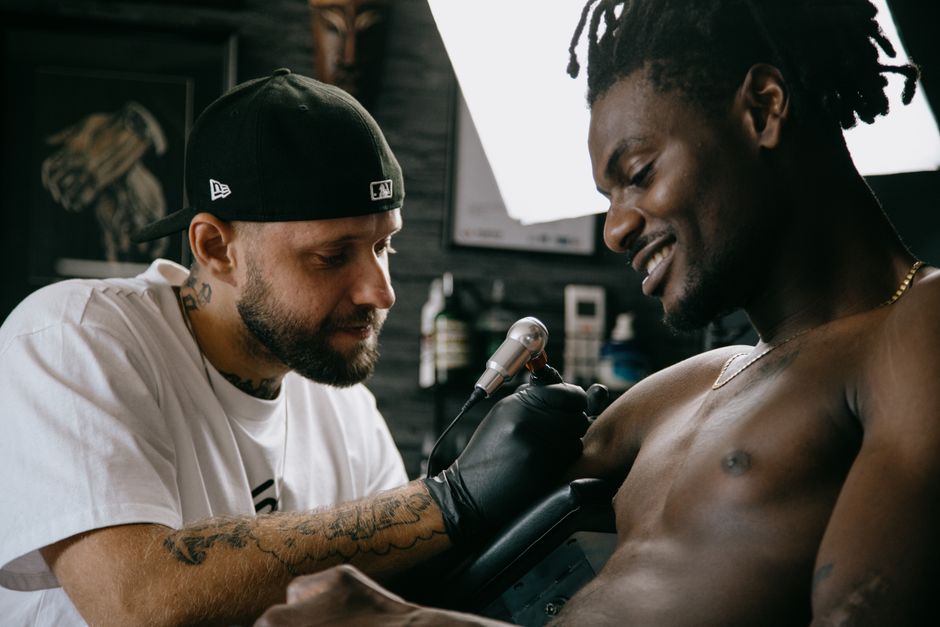
Ready to Build an Income Doing What You Love?
Most tattoo apprentices don’t earn much at first, and that’s normal. The real question is whether your training will leave you skilled, licensed and ready to earn for years to come. Each Mentor takes just two tattoo apprentices per tattoo studio, so seats fill up quickly.
Ready to become a Tattoo Artist? Apply now to Ink Different’s Traditional Tattoo Apprenticeship and start building an AI-proof career with licensing support along the way.
Frequently Asked Questions
Do tattoo apprentices get paid?
Most aren’t paid during early training. Many start earning through tips and commission once they tattoo clients under their Mentor’s supervision.
Why are tattoo apprenticeships usually unpaid?
Mentors invest months of one-on-one teaching, supplies and tattoo studio time before a tattoo apprentice brings in income. The early unpaid period reflects that investment.
How do tattoo apprentices support themselves?
Many keep a part-time job, rely on savings or use payment plans during the early stages, then start earning once they take supervised clients.
How long does a tattoo apprenticeship take?
Most take one to three years. Ink Different’s Traditional Tattoo Apprenticeship takes 18 to 24 months across four phases.
Do I need art experience to start a tattoo apprenticeship?
No. Ink Different’s Traditional Tattoo Apprenticeship is built for beginners and teaches drawing, linework and machine handling from the ground up.
Is a tattoo apprenticeship worth it if it’s unpaid at first?
It can be, if it includes real mentorship, structure and licensing support. Like college, you invest early to build skills that can earn for your whole career.
Related reading: career change tattoo apprenticeship, tools every beginner tattoo artist should know, and start your tattoo apprenticeship this spring.
