
Tattoo Apprenticeship vs Trade School: Which Path Fits You?
Trade school or apprenticeship? It’s one of the biggest questions for anyone choosing a hands-on career. Trade school teaches a skill mostly in a classroom or shop lab before you start working. An apprenticeship trains you on the job, under an experienced Mentor, while you do real work.
Both paths are growing. In spring 2025, public two-year colleges with a heavy vocational focus grew enrollment by 11.7%, according to the National Student Clearinghouse Research Center. Apprenticeships are thriving too.
But tattooing doesn’t fit neatly into either box. Below, we compare the classic “earn while you learn” apprenticeship with classroom-based trade school, explain where tattooing really sits and help you choose the path that fits. At Ink Different Tattoos, we’ve spent 15 years training Tattoo Artists through hands-on tattoo apprenticeships.
Key Takeaways
What is the difference between a tattoo apprenticeship and trade school?
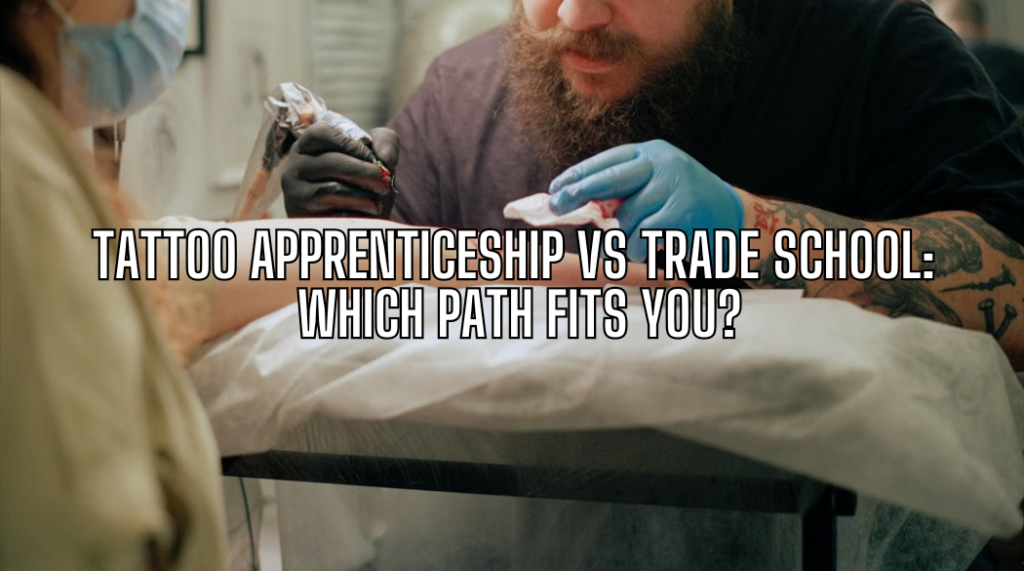
A tattoo apprenticeship trains you inside a working tattoo studio under an experienced Mentor. A trade school teaches skills in a classroom or lab setting, usually with less live client experience.
The classic apprenticeship model
In many trades, apprenticeships follow an “earn while you learn” model. Registered apprenticeships, overseen by the U.S. Department of Labor, combine paid on-the-job training with related instruction. According to Apprenticeship.gov, 93% of apprentices retain employment after completing an apprenticeship, with an average starting salary of $86,000. apprenticeship
The trade school model
Trade schools teach a specific career through structured classes and hands-on labs. You typically finish training first, then look for work. It suits people who learn well in a classroom setting and want a clear, fixed schedule.
Where tattooing sits
Tattooing is a skilled trade, but it doesn’t follow either model exactly. Most trade schools don’t teach tattooing, and tattoo apprenticeships usually aren’t paid registered apprenticeships. In a traditional tattoo apprenticeship, you learn inside a working tattoo studio under a Mentor, often while helping with tattoo studio duties. Some apprentices pay for structured training, and many work other jobs while they learn.
A few states do run tattoo training through licensed schools. Oregon, for example, lists graduating from an Oregon licensed tattoo career school as a main path to licensure, according to the Oregon Health Licensing Office. Elsewhere, the tattoo apprenticeship is the standard route.
Think of it like learning to swim. Trade school hands you a textbook on buoyancy. An apprenticeship puts you in the pool with a coach. Both have value, but tattooing demands the muscle memory only real practice builds.
Which path gets you working faster?
In most skilled trades, an apprenticeship gets you working right away, because the training is the job. In tattooing, a structured tattoo apprenticeship moves you toward professional work by putting you in front of real clients under supervision.
Most structured tattoo apprenticeships run 18 to 24 months, and every stage builds toward working professionally. Classroom hours don’t always translate into tattoo studio confidence the way supervised live tattooing does.
Speed isn’t just about the calendar. It’s about readiness. When you finish a tattoo apprenticeship, you’ve already handled the pressure of a client in the chair.
Why does hands-on mentorship matter more than a classroom?
Hands-on mentorship matters more because tattooing is a physical craft built on muscle memory, pressure control, and real-time correction that no classroom lecture can replicate.
You cannot learn needle depth from a slideshow. You learn it when a mentor watches your hand, adjusts your angle, and shows you how skin responds under the tattoo machine. That feedback loop is where real growth happens.
Mentorship also protects you from costly early mistakes. Our guide on mistakes aspiring tattoo apprentices should avoid shows how a strong mentor steers you clear of habits that stall careers.
Pro Tip: When comparing any training path, ask how many hours you’ll spend tattooing real clients under direct supervision. That number tells you more than any brochure.
What does each path really cost you?
The real cost of any path includes money, time and whether it actually prepares you to work.
In many trades, registered apprenticeships let you earn wages while you train, which is a big financial advantage. Trade school usually means paying tuition upfront and earning later. Tattooing sits in between. Tattoo apprenticeships are rarely paid, so it’s smart to plan your budget and ask about payment options upfront.
Don’t just measure the dollars. Measure the return. A cheaper path that leaves you unprepared costs far more in lost income and wasted time. We compare the bigger picture in our post on why tattoo apprenticeships are gaining ground as a solid alternative to college.
The payoff can be real. According to ZipRecruiter, the average Tattoo Artist in the United States earns $106,858 a year as of November 2026. It’s also work built on human skill, which is why Tattoo Artists are still essential as automation spreads.
How does each path handle tattoo licensing?
Licensing requirements are set by your state, county or city. The best training paths actively prepare you to meet them.
Many states require bloodborne pathogens training aligned with the OSHA Bloodborne Pathogens Standard. Some also require supervised training hours. A quality tattoo apprenticeship builds safety and licensing prep directly into your training.
State specifics matter. These guides can help:
- Texas: How to get your tattoo license in Texas
- California: Tattoo license requirements in California
- Colorado: How long it takes to get a tattoo license in Colorado
How do you choose the path that fits you?
Choose the path that puts you in front of real clients soonest, pairs you with experienced Mentors and prepares you for licensing. Those three factors decide whether you actually work as a Tattoo Artist.
Use these steps to decide:
- Step 1: Define your goal. Do you want to work professionally, or just experiment? Professionals need supervised, real-world experience.
- Step 2: Check the mentorship. Ask who’ll teach you and whether they’re working, experienced Tattoo Artists.
- Step 3: Confirm live client work. Make sure you’ll tattoo real people under supervision, not just practice skin.
- Step 4: Confirm licensing support. Your path should guide you through your state’s requirements.
- Step 5: Look at the culture. You want a supportive community that pushes you forward.

How Ink Different Tattoos trains you for a real career
Ink Different’s Traditional Tattoo Apprenticeship is a college alternative that combines personalized, hands-on training, in-person mentorship and licensing support.
It runs 18 to 24 months across four phases, with in-person training at one of 60+ tattoo studios nationwide. No prior experience is required, so beginners are welcome from day one.
Here’s what you can expect:
- Personalized training: Hands-on guidance tailored to how you learn.
- In-person mentorship: Learn from working Tattoo Artists inside real tattoo studios.
- Job-ready skills and licensing support: Finish prepared to work professionally, with help meeting your state’s requirements.
- A guaranteed job offer: Graduates receive a guaranteed job offer at one of Ink Different’s own tattoo studios.
- Interest-free payment plans: Flexible payments make training more accessible.
- Good Humans culture: A supportive, family-like community where you’re never alone.
When you’re ready to grow your name, our guide to platforms to help new and aspiring Tattoo Artists build their brand can help.
Note: Each Mentor takes just two tattoo apprentices per tattoo studio, because real mentorship can’t be mass-produced. Seats fill up quickly.
What is the Master Mentorship option?
Master Mentorship is Ink Different’s intensive one-year, in-person training for beginners and experienced Tattoo Artists. It’s designed to help you master a specific style, grow your career and prepare for business ownership.
You’ll train alongside celebrity and award-winning Master Mentors, including Al Fliction, Liz Cook, Kyle Dunbar, Boneface, Jordi Pla and Marcel Oliveira.
We also make training accessible, with Spanish-speaking locations in Denver, Orange County, NYC, Miami, San Antonio and San Diego.
What tools and resources should you know about?
Every beginning Tattoo Artist should learn the essential equipment and resources that support growth from tattoo apprenticeship through early career.
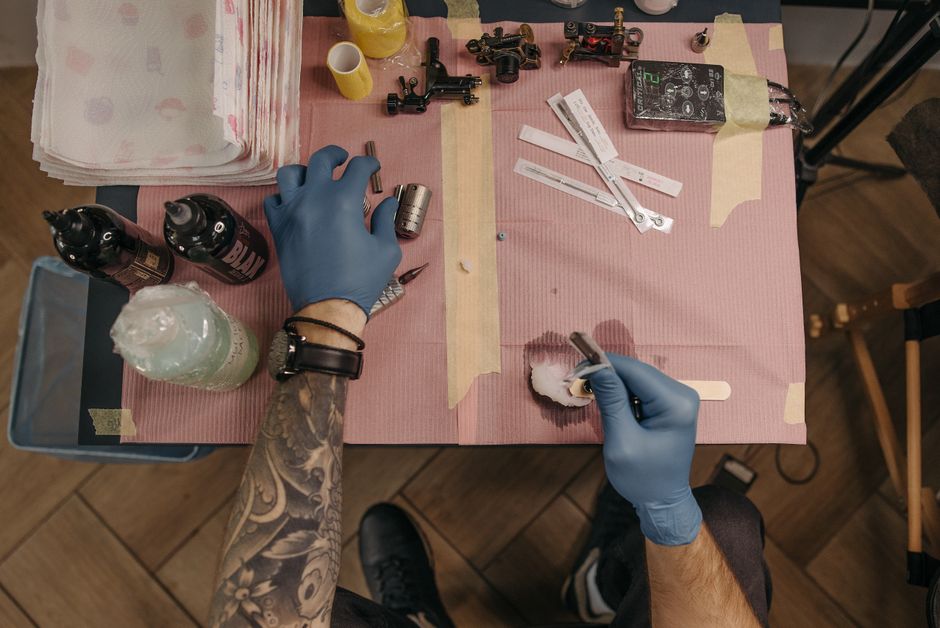
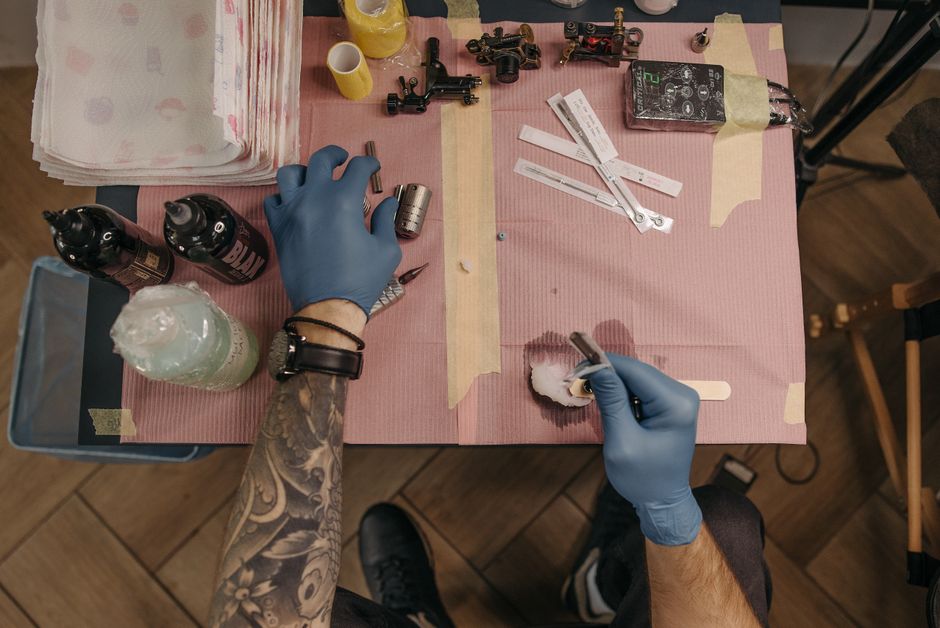
Start with these tools every beginner Tattoo Artist should know, including tattoo machines, power supplies, needles, inks and aftercare products. Knowing your gear early helps you train with confidence.
Aftercare matters too. Use resources like the American Academy of Dermatology’s tips for caring for tattooed skin to educate future clients.

Frequently Asked Questions
Is a tattoo apprenticeship better than trade school?
For most aspiring Tattoo Artists, yes. Most trade schools don’t teach tattooing, and a tattoo apprenticeship offers in-person mentorship and real client experience in a working tattoo studio.
Are tattoo apprenticeships paid?
Usually not. Unlike many registered trade apprenticeships, most tattoo apprenticeships don’t pay wages. Some charge for structured training, so ask about costs and payment options upfront.
How long does a tattoo apprenticeship take?
Most tattoo apprenticeships take one to three years. Ink Different’s Traditional Tattoo Apprenticeship takes 18 to 24 months across four phases.
Do I need art experience to start a tattoo apprenticeship?
No. Ink Different’s Traditional Tattoo Apprenticeship is built for beginners and teaches drawing fundamentals, linework and machine handling from day one.
Does Ink Different guarantee a job after the tattoo apprenticeship?
Yes. Graduates of the Traditional Tattoo Apprenticeship receive a guaranteed job offer at one of Ink Different’s own tattoo studios, along with job-ready skills and licensing support.
What makes Ink Different different from a tattoo school?
Ink Different offers in-person mentorship at 60+ tattoo studios nationwide, award-winning Master Mentors, a “Good Humans” culture, interest-free payment plans and 15 years of experience.
Ready to take the first step?
Trade school works well for many careers. But if tattooing is your goal, a tattoo apprenticeship puts you in the chair, next to a Mentor, building a craft no machine can replace.
Ready to become a Tattoo Artist? Apply now to Ink Different’s Traditional Tattoo Apprenticeship and start building an AI-proof career with licensing support along the way.
