
Apprentice Spotlight: Daniel Mercedes on Phase Two, Repetition, and Discovering Japanese Style
Key Takeaways
Who Is Daniel Mercedes?
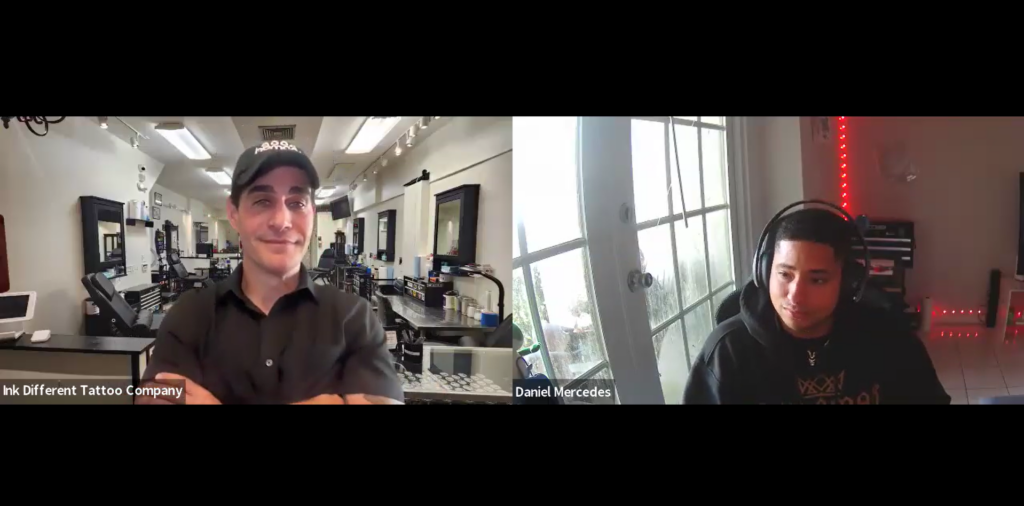
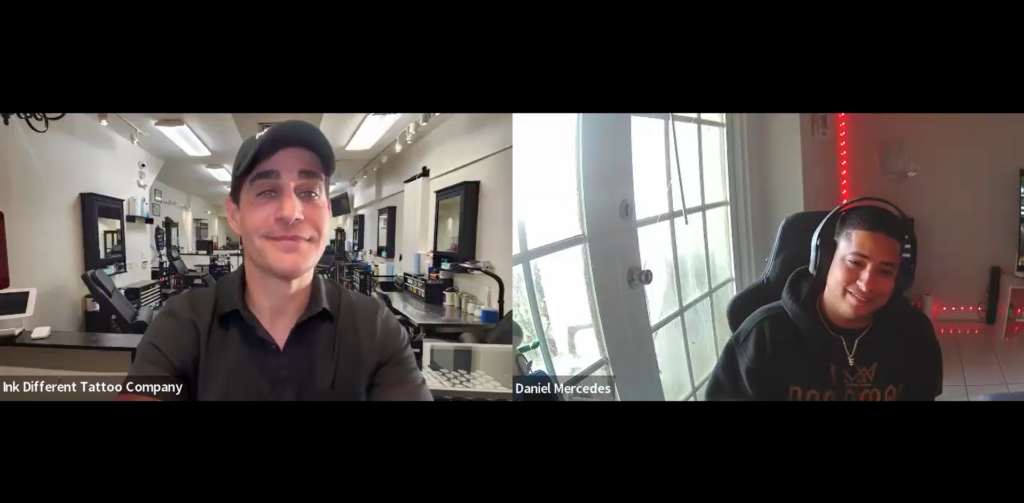
Daniel Mercedes is an Ink Different apprentice in Broward County, Florida, and a soldier. He served with the 82nd Airborne Division, became a staff sergeant, and now works as a motor sergeant for a company.
This is his second start with Ink Different. He first trained as a teenager, about seven years ago, before life led him to the military. After a divorce, he thought about what had made him happiest and came back. “I found this again,” he says, “and I’m not letting it go for nothing in this world.”
He’ll train at Funhouse Tattoos in Pompano Beach, with his Mentor, Casper.
What Is Phase Two in a Tattoo Apprenticeship?
In Ink Different’s Traditional Tattoo Apprenticeship, Phase Two is machine practice. It happens online, with apprentices tattooing on synthetic skin before working with real clients in Phase Three.
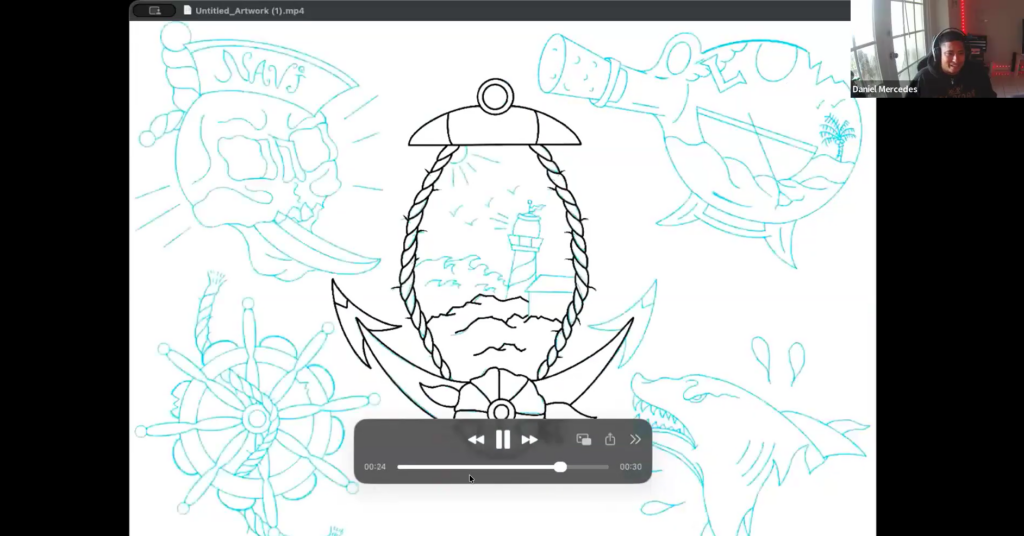
Daniel says it’s a big change from Phase One. “In Phase One, I was relearning everything, the rules on what actually makes a good tattoo,” he says. “Now I’m implementing it, actually tattooing a pad to show how I’m improving.”
It’s also more technical. “This is where you have your safety,” he says. Phase Two is about saturating lines properly and protecting the skin. That’s why understanding standards like the OSHA bloodborne pathogens standard matters from the start.
Pro Tip: Daniel’s Phase Two goal is simple: the best line possible, every line matching it, and no damage to the skin.
Why Does Repetition Matter So Much in Phase Two?
Because every line has to be just as good as the last.
“You have to make sure you have the best line possible, the other lines look the same, and the client is not getting damaged,” Daniel says. “It’s taking a little bit of work, but with hard work and dedication, I’m going to get there.”
He believes drawing every day is what makes artwork better. Even with talent, he says, real growth comes from doing something “over and over” with passion.
Doing it again
Daniel’s Mentors aren’t afraid to ask him to redo work. He sees that as part of the process, not a criticism. “None of them frustrate me whatsoever, because I know they’re there to help me,” he says.
He’s seen how repetition pays off. “You were thinking you couldn’t do this thing, but you put in the work, and now you’re doing harder stuff you never thought you would do,” he says. “That’s what they’re there for.”
How Did Daniel Discover Japanese Style?
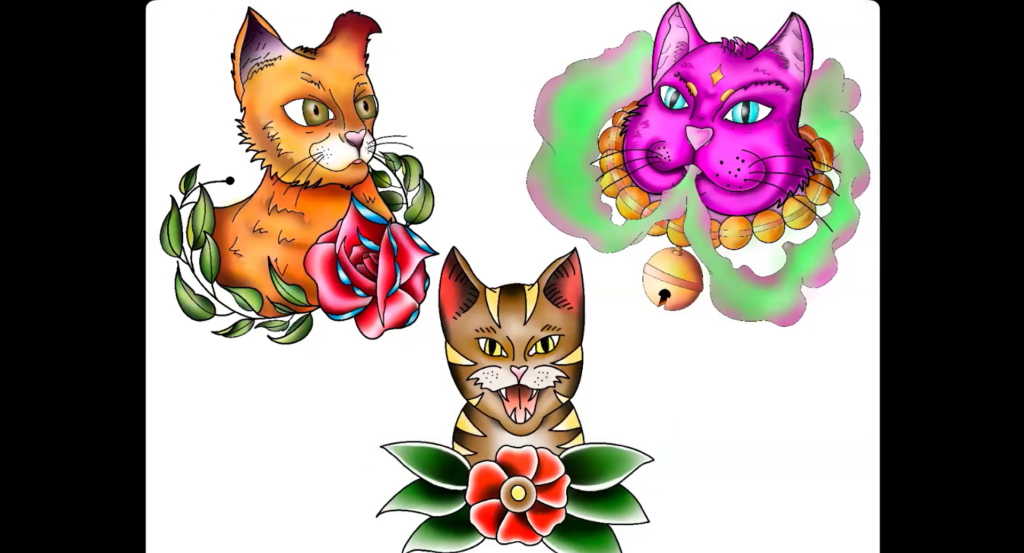
Daniel discovered Japanese style during Phase One, when apprentices design in four foundational styles: American traditional, neo-traditional, new school, and Japanese.
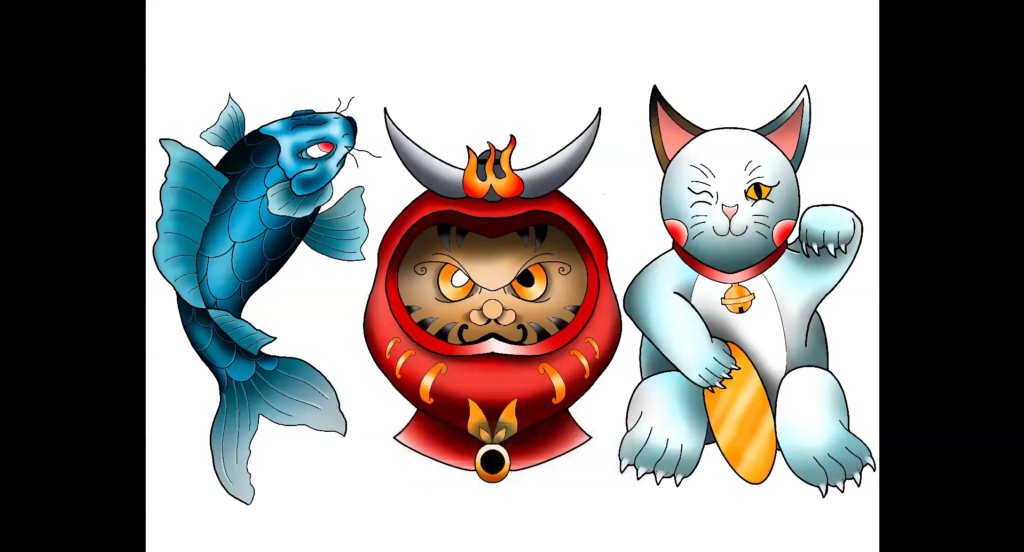
He’d always loved American traditional. He saw it everywhere in the military, like eagles and anchors. But Japanese was new to him. His Japanese piece features a koi fish, a design he has tattooed on himself, plus a lucky cat.
“I had never thought of Japanese before, but I feel like I have a calling for it,” he says. “So far, this is my favorite. I feel like with more practice, I will excel in this.”
What Does Japanese Style Teach a Developing Artist?
For Daniel, Japanese style was a lesson in following the rules that make a tattoo look good.
He found it different from the American traditional and new school work he’d been doing. “Now you have different values, you have a different style,” he says. “You have to make sure that you’re doing the proper shading and coloring.”
He also describes Japanese as using less packing than American traditional. But it “shows, hands down, the rules of tattooing to make a tattoo look good.”
Learning every style first
Daniel’s experience shows why it helps to learn all four styles before choosing a direction. He never expected Japanese to become his favorite. Long term, he wants range: “I can do Japanese style here, fine line here, lettering here.” That variety will help as he starts showing his work to future clients.
How Can You Survive and Thrive in Phase Two?
Daniel’s approach offers a few clear steps:
- Accept that it’s more technical. Phase Two takes work. Daniel expects to get there through “hard work and dedication.”
- Redo assignments without frustration. “I’m not afraid to repeat the assignments over and over again,” he says.
- Listen to your Mentors. “If I want to make the best art, I have to listen to what they’re telling me.”
- Remember why you chose this. “In the military, you have no choice,” he says. “Over here, you actually have a choice. This is something you actually want to do.”
- Use your nerves as fuel. He worries about not performing the way he pictures himself performing, and that pushes him to keep improving.
- Get to know your equipment. A lot has changed since he first started, when heavy coil machines were the norm. Learning today’s tattoo machines and supplies is part of the process.
Getting discouraged and quitting during the hardest stretch is one of the biggest pitfalls new apprentices face. Daniel’s answer is to keep doing it again.
Get Serious About Your Craft With Ink Different Tattoos
Ink Different’s Traditional Tattoo Apprenticeship is an 18 to 24 month, four-phase tattoo apprenticeship built for beginners. Ink Different has trained Tattoo Artists for 15 years. No prior art experience is required.
- Phase One: Art and design, online.
- Phase Two: Machine practice on synthetic skin, online. This is where Daniel is now.
- Phase Three: Supervised tattoos on real clients in a tattoo studio.
- Phase Four: Building independence and preparing for licensing.
This is a career that comes with confidence. You’ll finish with job-ready skills, licensing support, and a guaranteed job offer at one of Ink Different’s own tattoo studios. The Traditional Tattoo Apprenticeship is available at 60+ tattoo studios nationwide.
When Daniel reaches Phase Three, he’ll work at Funhouse Tattoos, where Suji Kim and other Tattoo Artists who completed Ink Different’s tattoo apprenticeship now tattoo. Casper also judges tattoo conventions and brings his crew along, so Daniel will get a look at the convention circuit too.
The hands-on, human side of this work is why Tattoo Artists can’t be replaced by technology, and why many people choose this path as an alternative to a four-year degree.
Mentorship That Pushes Your Brand and Skills Further
Once you’ve built your foundation, Ink Different’s Master Mentorship connects you with Master Mentors, including Liz Cook, Kara Gutierrez, Joey Tattoo, Boneface, Jordi Pla, Kyle Dunbar, James Vaughn, Big Jaz, Marcel Oliveira, Big Ceeze, Al Fliction, BillyJack Gunter, Javi Antunez, and Sebastian Murphy.
Ink Different also offers Spanish-speaking locations in Denver, Orange County, New York City, Miami, San Antonio, and San Diego. Its “Good Humans” culture means you join a supportive community from day one.
Ready to Become a Tattoo Artist?
Daniel Mercedes is proving that repetition works, in the Army and in tattooing. His family is behind him, too. “Now my mom and my friends are all just waiting for me to graduate,” he says, “so they can come by the shop and get a tattoo.”
His advice for anyone hesitating: “It’s okay to be scared, it’s okay to be nervous, but do it anyway.”
Seats are limited, with only two apprentices per tattoo studio per Mentor.
Ready to become a Tattoo Artist? Apply now to Ink Different’s Traditional Tattoo Apprenticeship and start building an AI-proof career with licensing support and a guaranteed job offer at one of Ink Different’s own tattoo studios.
Frequently Asked Questions
What is Phase Two?
Machine practice on synthetic skin. Phase Two of the Traditional Tattoo Apprenticeship happens online, before supervised work on real clients in Phase Three.
What is Daniel practicing in Phase Two?
Crystals and florals, with a focus on clean, consistent, saturated lines that don’t damage the skin.
When did Daniel discover Japanese style?
In Phase One, while designing in the four foundational styles. It’s now his favorite.
Do I need art experience to start?
No. The Traditional Tattoo Apprenticeship teaches design and machine fundamentals from the beginning.
How long does the Traditional Tattoo Apprenticeship take?
Ink Different’s Traditional Tattoo Apprenticeship takes 18 to 24 months across four phases, with licensing support and a guaranteed job offer at one of Ink Different’s own tattoo studios.
Are there Spanish-speaking tattoo apprenticeship locations?
Yes. Ink Different offers Spanish-speaking locations in Denver, Orange County, New York City, Miami, San Antonio, and San Diego.
