
Bloodborne Pathogens Certification for Tattoo Artists: What It Is and How to Get It
Bloodborne pathogens (BBP) certification is a short safety course that teaches Tattoo Artists how to prevent the spread of diseases like hepatitis B, hepatitis C and HIV through blood. When you finish, you get a certificate showing you completed the training. Many states and local health departments require it before you can tattoo, and it typically needs to be renewed every year.
The training is based on the federal OSHA Bloodborne Pathogens Standard. This guide covers what the course teaches, the main types of BBP courses, how renewal works and how to get certified.
Key Takeaways
What is bloodborne pathogens certification for tattoo artists?
Bloodborne pathogens certification is documented safety training that teaches Tattoo Artists to recognize, handle and prevent exposure to infectious microorganisms carried in blood.
Tattooing breaks the skin repeatedly, so cross-contamination is a real risk. According to OSHA, bloodborne pathogens include hepatitis B, hepatitis C and HIV. The training teaches you how to protect yourself, your clients and your tattoo studio through sterilization, protective equipment and exposure response.
The federal rule behind it is formally titled 29 CFR 1910.1030. All of the requirements of OSHA’s Bloodborne Pathogens standard can be found in Title 29 of the Code of Federal Regulations at 29 CFR 1910.1030. in
Why does bloodborne pathogens certification matter so much?
It protects people’s health, keeps you legally compliant and builds client trust.
Clients trust you with their skin and their health. A single safety lapse can cause real harm and damage a career early. Proper training is part of what separates a professional Tattoo Artist from someone tattooing without the right knowledge.
It also protects you. Tattoo Artists work around needles and blood every day, and knowing how to respond to a needlestick or spill is essential.
There’s a legal side too. OSHA’s rule applies to employers with workers who have occupational exposure. Many states and local health departments also require BBP training for anyone who tattoos, whether they’re an employee, an apprentice or self-employed. Check the rules where you work.
That care and judgment is also part of why Tattoo Artists are still essential as automation spreads.
What do you actually learn in the course?
A BBP course teaches how diseases spread, how to use protective equipment, how to sterilize and clean safely and how to respond to an exposure. It’s practical, everyday knowledge.
OSHA requires the training to cover specific topics. Workers must receive regular training that covers the dangers of bloodborne pathogens, preventive practices and post-exposure procedures. In a tattoo setting, that typically includes: luc
- Transmission: How pathogens like hepatitis B, hepatitis C and HIV spread through blood and other potentially infectious materials.
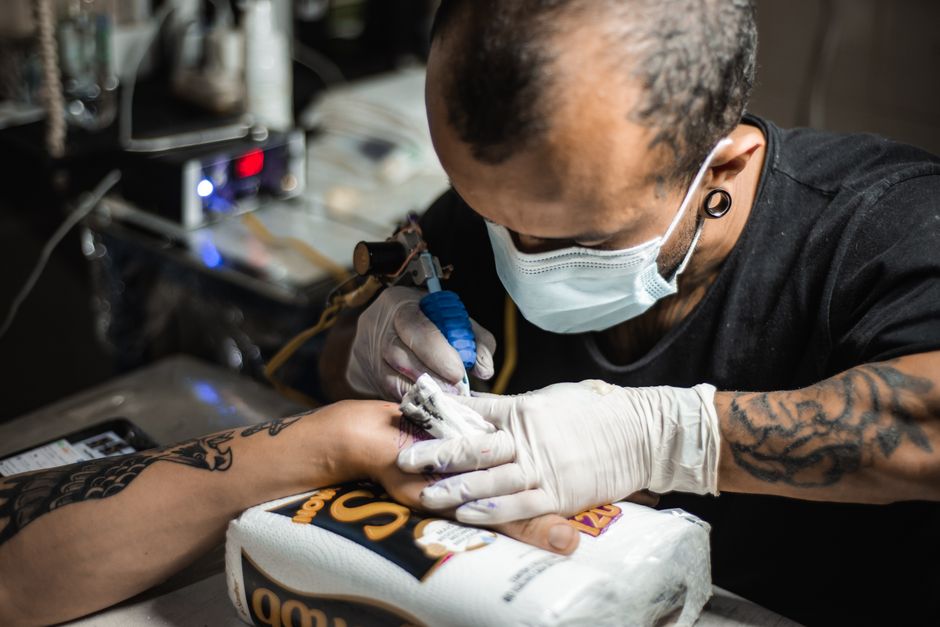
- Protective equipment: Proper use of gloves, barriers and single-use needles.
- Sterilization and cleaning: Autoclave use, surface disinfection and safe station setup.
- Exposure response: What to do immediately after a needlestick or blood spill.
- Sharps and waste disposal: Safe handling of sharps containers and contaminated materials.
- Hepatitis B vaccination: Information about the vaccine and when it’s offered.
Pro Tip: Safety habits compound. The clean setup routine you build during training becomes muscle memory that protects every client.
For client aftercare, the American Academy of Dermatology’s tips for caring for tattooed skin are a trusted resource.
How do you get bloodborne pathogens certified?
Choose a course your state accepts, complete the training, pass the assessment and save your certificate.
- Step 1: Check your state’s requirements. Contact your state or local health department to confirm which BBP courses they accept and how long training must be.
- Step 2: Pick the right course type. Choose between general OSHA-based courses and body-art-specific courses, online or in person, based on what your state requires.
- Step 3: Complete the training. Work through the lessons on transmission, prevention and exposure response.
- Step 4: Pass the assessment. Most courses end with a short quiz.
- Step 5: Save your certificate. Download and print it right away. You’ll likely need it for your license or registration and for tattoo studio records.
- Step 6: Set a renewal reminder. Mark your calendar so your training never lapses.
Course types at a glance:
- General OSHA-based BBP courses: Cover the federal standard and are used across many industries.
- Body-art-specific BBP courses: Tailored to tattooing and piercing, and sometimes required by states or counties.
- Online vs. in person: Many Tattoo Artists complete BBP training online. Some states or employers may require a specific approved provider.
To avoid common slip-ups on the way to licensing, read our guide to the mistakes aspiring tattoo apprentices should avoid.
How long does certification take and how often do you renew?
Many BBP courses can be completed in a single sitting, and training is typically renewed every year.
OSHA’s rule sets the annual rhythm. Employers must offer the training on initial assignment, then at least annually. Many states and local health departments follow a similar yearly renewal, but requirements vary, so check your state’s rules. luc
Course length varies by provider and by what your state requires. Renewal is usually a shorter refresher course and quiz.
Your BBP training is one piece of your overall licensing path. For the bigger picture, see how to get your tattoo license in Texas, tattoo license requirements in California and how long it takes to get a tattoo license in Colorado.
Where do you get certified and how much does it cost?
You can get BBP training through online providers, in-person classes and, in some areas, local health department programs. Costs vary by provider and course type.
Before you enroll, confirm the course is accepted where you’ll work. Some states and counties only accept approved providers or require body-art-specific content. A course your state doesn’t recognize won’t help your license application.
If you plan to move or work in another state, check that state’s requirements too, since an accepted course in one place may not meet the rules in another.
How does Ink Different build safety into your training?
Ink Different builds bloodborne pathogens safety, sterilization and professional protocols into the Traditional Tattoo Apprenticeship, with licensing support so you’re not piecing it together alone.
For 15 years, we’ve trained aspiring Tattoo Artists to treat safety as the foundation of the craft. The Traditional Tattoo Apprenticeship runs 18 to 24 months across four phases and is built for complete beginners.
Here’s what you can expect:
- In-person training: Learn with a Mentor at one of 60+ tattoo studios nationwide.
- Hands-on, personalized mentorship: Working Tattoo Artists who care about your growth and safety.
- A clear four-phase structure: Building from fundamentals to supervised client work.
- Licensing support and a guaranteed job offer: You finish job-ready, with a guaranteed job offer at one of Ink Different’s own tattoo studios.
- Interest-free payment plans: Flexible payments make training more accessible.
It’s a college alternative that builds a hands-on career with real income potential. According to ZipRecruiter, the average Tattoo Artist in the United States earns $106,858 a year as of November 2026. Learn why tattoo apprenticeships are gaining ground as a solid alternative to college.
You’ll also join our “Good Humans” culture, a supportive, family-like community. Each Mentor takes just two tattoo apprentices per tattoo studio, so seats fill up quickly.
What if you want to level up faster?
Ink Different’s Master Mentorship is one year of in-person training with award-winning Master Mentors, built to grow your skills, your brand and your path to owning a tattoo studio. It works for beginners and experienced Tattoo Artists alike.
You’ll train with celebrity and award-winning Master Mentors, including Al Fliction, Liz Cook, Kyle Dunbar, Boneface, Jordi Pla and Marcel Oliveira. It’s built for mastering a specific style and growing your career.
Once you’re working, your online presence matters too. Explore these platforms to help new and aspiring Tattoo Artists build their brand.
Making tattoo training accessible for everyone
Ink Different offers Spanish-speaking locations, so language is never a barrier to a professional tattoo career.
Spanish-speaking locations include Denver, Orange County, New York City, Miami, San Antonio and San Diego.
Ready to Build an AI-Proof Career?
Bloodborne pathogens certification is one of the first and simplest steps toward a professional tattoo career. The next step is hands-on training that builds real skill alongside those safety habits.
Ready to become a Tattoo Artist? Apply now to Ink Different’s Traditional Tattoo Apprenticeship and start building an AI-proof career with licensing support and safety training along the way.
Frequently Asked Questions
Do all Tattoo Artists need bloodborne pathogens certification?
Most do. OSHA requires employers to train exposed workers, and many states and localities require BBP training for anyone who tattoos. Check your state and local rules.
How long does bloodborne pathogens certification last?
Training is typically renewed every year. OSHA requires employers to provide it at least annually, and many states follow a yearly cycle too.
Can I get certified online?
Often, yes. Many BBP courses are available online, but confirm your state or county accepts the course before you enroll.
What’s the difference between general and body-art BBP courses?
General courses cover OSHA’s standard across industries. Body-art courses focus on tattooing and piercing, and some states require them.
Do Tattoo Artists need the hepatitis B vaccine?
OSHA requires employers to offer the hepatitis B vaccine to exposed workers after training and within 10 days of starting. Talk to your doctor about vaccination.
Do I need art experience to start a tattoo apprenticeship?
No. Ink Different’s Traditional Tattoo Apprenticeship is built for complete beginners and teaches safety, sterilization and drawing fundamentals from day one.
