
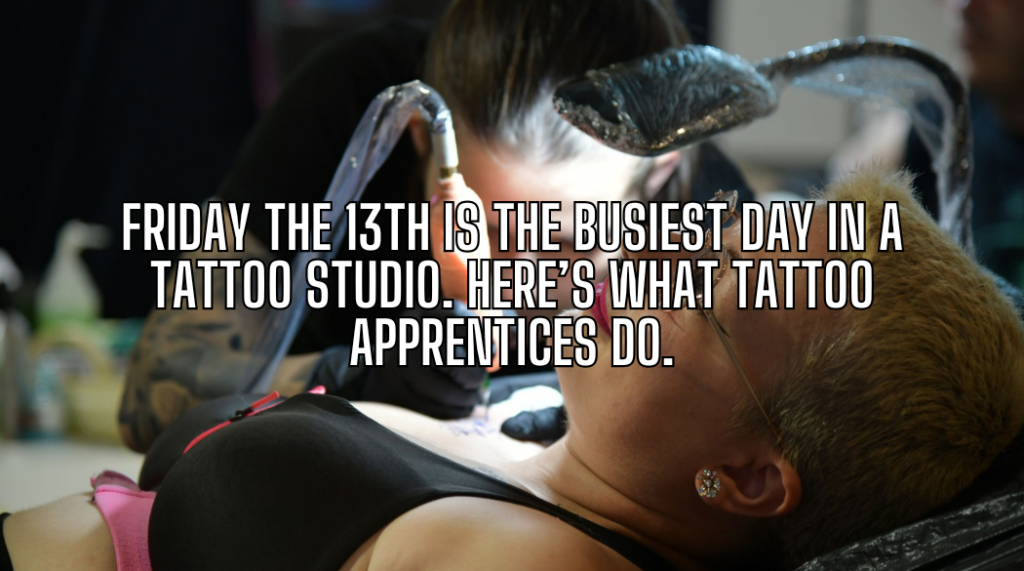
Friday the 13th Is the Busiest Day in a Tattoo Studio. Here’s What Tattoo Apprentices Do.
Most days in a tattoo studio run on appointments. Today is different. It’s Friday the 13th, and many tattoo studios have a walk-in line before they unlock the door. While clients pick out tiny daggers and black cats, the tattoo apprentices in the back are keeping the whole operation running.
Friday the 13th is a long-running tattoo industry tradition where tattoo studios offer small pre-drawn flash designs at low, fixed prices. It draws big crowds and gives apprentices rare, high-rep exposure to real tattoo studio operations and client work. Here’s what that day looks like from the apprentice’s side, and why it teaches so much.
Key Takeaways
Why is Friday the 13th the busiest day in a tattoo studio?
Friday the 13th gets so busy because tattoo studios run flash specials with small, pre-drawn designs at low fixed prices. The tradition turns an “unlucky” date into a community event that fills waiting rooms from open to close.
The tradition has been part of tattoo culture for decades. Designs play on superstition: the number 13, black cats, spiders, skulls, and daggers. The traditional price is $13, though many tattoo studios now charge more to cover supplies and time.
For clients, it’s a quick, affordable, low-commitment tattoo. For the tattoo studio, it squeezes days of work into one shift. That volume is exactly why it’s so valuable for anyone learning the craft. You see more skin, more personalities, and more problem-solving in one day than in weeks of regular appointments.
It doesn’t happen often, either. Every year has at least one Friday the 13th and never more than three. After today, the next one is August 13, 2027.

What do tattoo apprentices do on Friday the 13th?
On Friday the 13th, tattoo apprentices set up and break down stations, sterilize equipment, manage clients, prep stencils, and support their Mentors from open to close.
A flash day shows every moving part of a working tattoo studio at once. You see how Tattoo Artists pace themselves over a long shift, how clients move through the space, and how sanitation stays strict even when things move fast.
Here’s where apprentices usually plug in on the big day:
- Station setup: Wrapping surfaces in barrier film and laying out needles, ink caps, and machines for each Tattoo Artist.
- Client flow: Managing the waitlist, answering questions, and keeping nervous first-timers calm as the line grows.
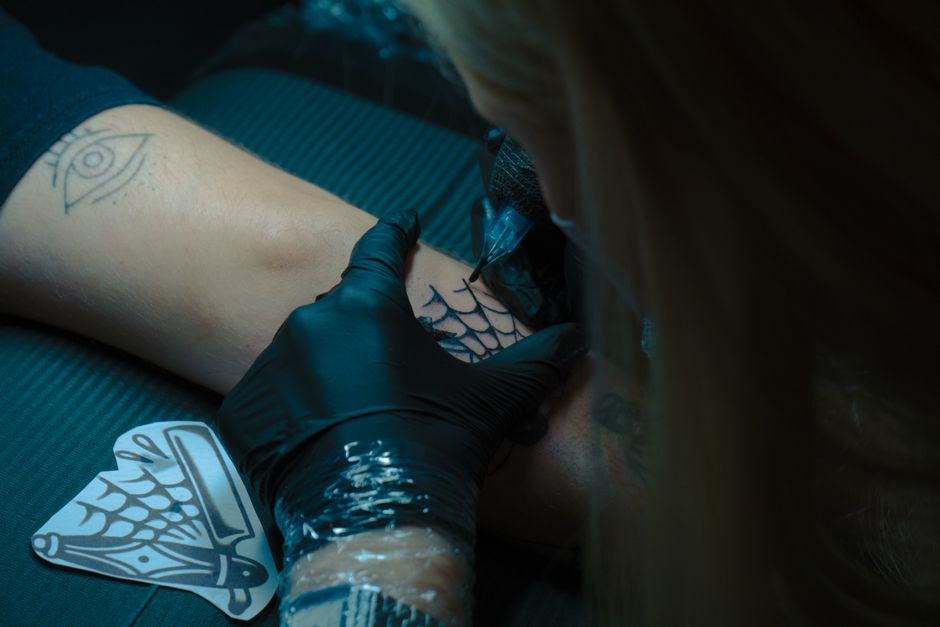
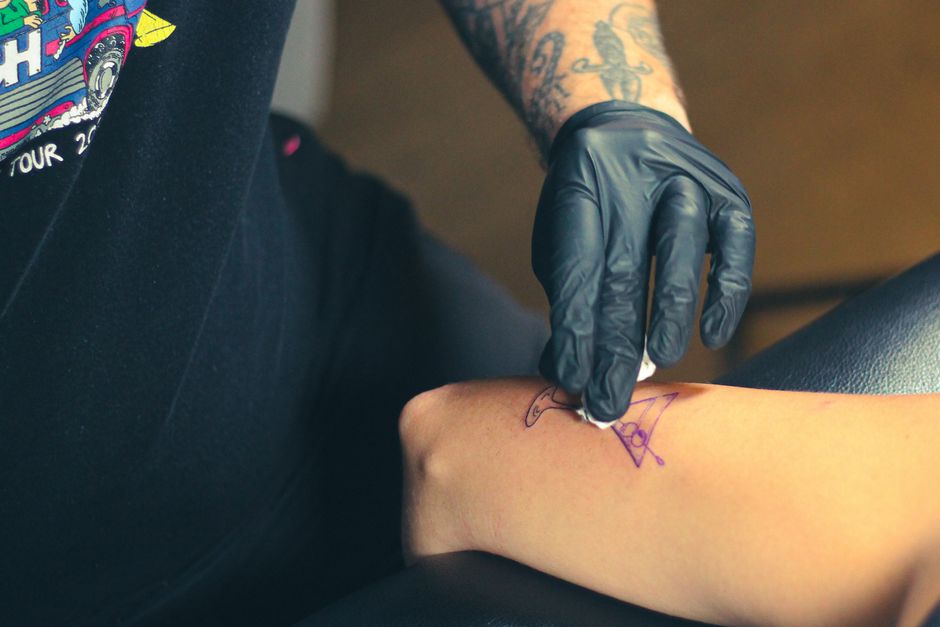
- Stencil work: Sizing, placing, and applying stencils so Tattoo Artists can work faster without losing precision.
- Sanitation: Breaking down stations between clients and following bloodborne pathogen protocols on every reset.
- Supervised tattooing: In some tattoo studios, and only where state rules allow, later-stage apprentices may tattoo simple flash with their Mentor beside them.
By closing time, you’ve worked around more real clients and real tattoos than a month of slow weekdays could give you.
How do apprentices prepare flash sheets for a Friday the 13th event?
Apprentices often help prepare Friday the 13th flash by drawing small, bold designs that tattoo quickly. The designs are then organized into numbered sheets built for fast, repeatable walk-in work.
Flash is its own discipline. Designs have to read clearly at a small size, heal well, and take about 15 to 30 minutes to tattoo. That teaches something most art classes don’t: how to design for skin instead of paper.
Drawing flash forces you to tighten your linework and commit to clean, confident strokes. Over time, you learn which lines hold up in skin and which ones blur as a tattoo heals. To sharpen your fundamentals, get to know the tools every beginner Tattoo Artist should know.
Pro Tip: Keep Friday the 13th flash simple and iconic. Black-and-gray daggers, spiders, “13” numerals, and small symbols heal cleaner and move faster than detailed color work. Aim for designs that take 20 minutes or less.
How can you survive your first Friday the 13th as a tattoo apprentice?
To get through your first Friday the 13th, show up early, prep thoroughly, stay calm, and check in with your Mentor often. Treat every task as a chance to learn how a busy tattoo studio really works.
- Arrive before open. Stock, sterilize, and wrap every station so nothing stalls once the line comes in.
- Own the client flow. Greet walk-ins, manage the list, and keep people at ease. Your calm takes pressure off the Tattoo Artists.
- Stay close to your Mentor. Watch how they pace, place, and finish fast flash. Save questions for between clients, never during a tattoo.
- Reset fast and clean. Break down and rebuild the station as soon as a client is bandaged. Speed only counts when sanitation stays perfect.
- Debrief at close. Talk through what worked, what slowed things down, and what you’d change next time.
Do these well, and you become the apprentice your Mentor wants on the floor for every rush. Before your first big day, read up on the mistakes aspiring tattoo apprentices should avoid so you don’t learn them the hard way.
What skills does a Friday the 13th rush teach an apprentice?
A Friday the 13th rush teaches speed, consistency, client communication, sanitation discipline, and composure under pressure. These are the job-ready skills that separate hobbyists from working Tattoo Artists.
Quiet days give you room to slow down. A flash day tests everything at once. You find out how quickly you work, how well you talk to strangers, and how you hold up when the room is loud. You also learn to stay focused and kind when you’re tired.
These human skills are a big reason tattooing holds up as a career. Machines can’t read a nervous client or steady someone through their first tattoo. That’s why Tattoo Artists are still essential as automation spreads into other jobs.
A rush day also shows you the business side. You see how walk-in volume, pricing, and tips add up. You also see how one flash client can become a regular who books bigger pieces later. To see what the career can pay, check ZipRecruiter’s average Tattoo Artist salary data.
How do studios stay clean and compliant during a high-volume day?
Tattoo studios stay clean on busy days by following strict bloodborne pathogen protocols. That means single-use needles, barrier film, and a full station breakdown between every client, in line with OSHA’s bloodborne pathogens standard and local health codes.
Speed never means cutting corners. The busiest day is when sanitation matters most, because more clients mean more chances for mistakes. Apprentices are often the ones keeping the floor clean, so one skipped step can hurt a client and a tattoo studio’s reputation.
That’s why apprentices train on bloodborne pathogen safety. They also learn to explain aftercare, including tips from the American Academy of Dermatology on caring for tattooed skin. Safety training also ties into licensing, which varies by state.
How do you get a seat on the tattoo studio floor in the first place?
You earn a seat on the tattoo studio floor by completing a structured tattoo apprenticeship. It builds your fundamentals, puts you under experienced Mentors, and prepares you for real client work and licensing.
You can’t watch your way into this career. Online videos and weekend workshops can’t replace hands-on training with a Mentor who works on real clients every day. If you’re in a job that leaves your creativity unused, a tattoo apprenticeship is a strong fit for career changers.
It’s also a real alternative to a four-year degree and the debt that comes with it. That’s why tattoo apprenticeships keep gaining ground as an alternative to college.
Get Serious About Your Tattoo Career With Ink Different Tattoos
Ink Different Tattoos has spent 15 years training Tattoo Artists through the Traditional Tattoo Apprenticeship. It’s hands-on training built to make you job-ready, with licensing support and real mentorship along the way.
What You Can Expect from Our Traditional Tattoo Apprenticeship
The Traditional Tattoo Apprenticeship takes 18 to 24 months across four phases. It’s designed for complete beginners, so no prior art experience is required.
- Personalized training: Hands-on coaching matched to your pace and goals, not a one-size-fits-all classroom.
- Real tattoo studio experience: Train under a Mentor at one of 60+ tattoo studios nationwide. You’ll do supervised tattoos in Phase 3, then start earning an income in Phase 4’s Junior Artist Externship.
- Beginner-friendly: You learn drawing and machine fundamentals from the start, so you don’t need a portfolio to apply.
- Licensing support and job-ready skills: You finish prepared to work professionally, get licensed, and build your client base.
A Career That Comes With Confidence
By the time you finish all four phases, you’ll have tattooed real clients, built a portfolio, and learned to stay steady under pressure. You’ll also have licensing support and a guaranteed job offer at one of Ink Different’s tattoo studios. A Friday the 13th rush will feel like a normal day at work.
Mentorship That Pushes Your Brand and Skills Further
Want to go further? The one-year, in-person Master Mentorship puts you beside Master Mentors like Al Fliction, Liz Cook, Kyle Dunbar, Boneface, and Jordi Pla. It’s built for mastering a style, growing your career faster, and preparing to open your own tattoo studio.
Making Tattoo Training Accessible for Everyone
Ink Different offers Spanish-speaking locations in Denver, Orange County, New York City, Miami, San Antonio, and San Diego. Language should never stand between you and a tattoo career. Interest-free payment plans are available too.
Remember: Each Mentor takes on just two tattoo apprentices per tattoo studio. That limit keeps the training hands-on, and it means seats fill up.
Ready to Become a Tattoo Artist?
The next Friday the 13th is August 13, 2027. If you start now, you could be nine months into your training when that line forms. You’d be behind the counter learning instead of in line.
Apply now to Ink Different’s Traditional Tattoo Apprenticeship and start building a hands-on career with licensing support and a guaranteed job offer.
Frequently Asked Questions
Why is Friday the 13th so busy at tattoo studios?
Many tattoo studios run flash specials with small, pre-drawn designs at low fixed prices. The date has become a tradition that brings in walk-in clients from open to close.
Do tattoo apprentices actually tattoo on Friday the 13th?
It depends on the tattoo studio, the apprentice’s stage of training, and state rules. Most apprentices focus on station setup, sanitation, stencils, and client flow. Some later-stage apprentices tattoo simple flash under direct supervision.
Do I need art experience to start a tattoo apprenticeship?
No. Ink Different’s Traditional Tattoo Apprenticeship is built for beginners and teaches drawing and machine fundamentals from the start.
How long does the Traditional Tattoo Apprenticeship take?
It takes 18 to 24 months across four phases: Art and Design Principles, Machine Mastery and Practice Tattooing, Supervised Tattoos, and the Junior Artist Externship.
What makes Ink Different different from a tattoo school?
Ink Different offers hands-on mentorship in real tattoo studios, 15 years of training Tattoo Artists, and a guaranteed job offer at one of its tattoo studios.
Where does Ink Different offer Spanish-speaking tattoo training?
Ink Different offers Spanish-speaking tattoo apprenticeship locations in Denver, Orange County, New York City, Miami, San Antonio, and San Diego.
