

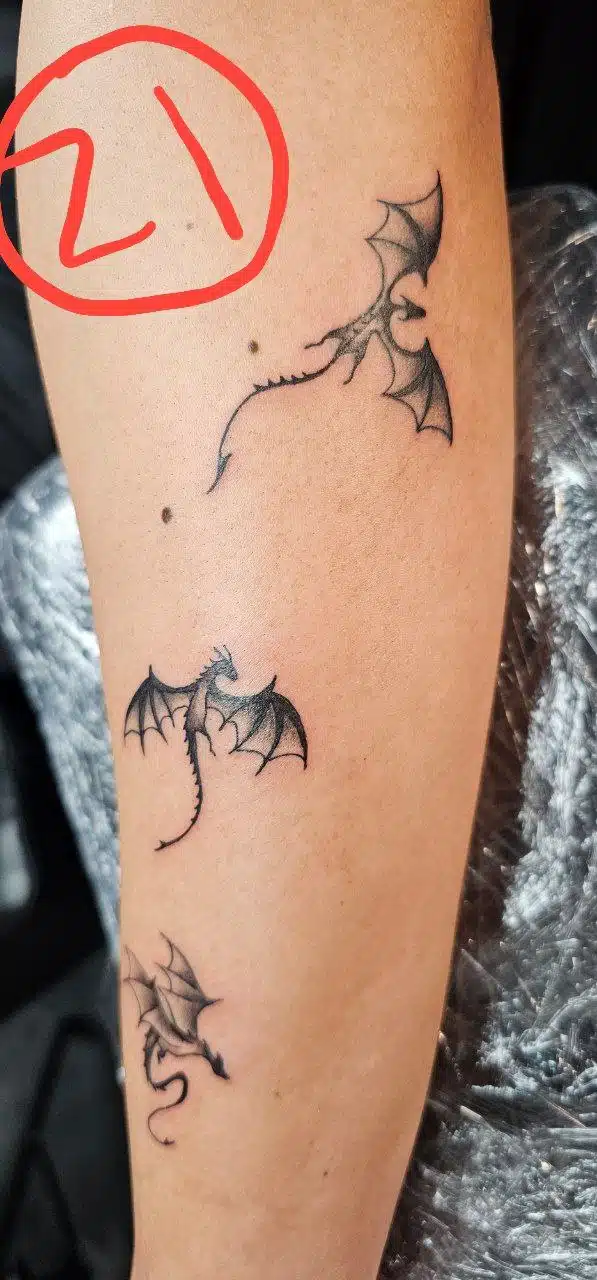
Glow in the Dark Tattoos: What You Need to Know
What are glow in the dark tattoos?
Glow in the dark tattoos are a striking idea: art that appears faint or invisible in daylight, then lights up under blacklight. They can look amazing, and there is no shortage of variety across tattoo styles and designs. Before you commit, though, it is worth understanding how these tattoos actually work, and the real risks and uncertainties that come with the ink.
At a glance: glow in the dark tattoos
What is actually in glow in the dark ink?
When they were first developed, glow in the dark tattoos achieved their effect in a more straightforward but dangerous way. Early formulas used phosphorus-based compounds, which is a carcinogen. That produced a consistent glow, but it could lead to a range of skin conditions, including cancer.
Newer inks are reactive to UV light rather than glowing on their own. The problem is transparency. Because the FDA does not regulate inks for tattooing, there is very little information available about them. A full list of ingredients is not readily available for most major manufacturers. Some brands claim to be non-toxic and natural, but remember that phosphorus is natural too. The data sheets on these inks are not based on scientific human studies, since the FDA is not involved. On top of that, some brands use animal-based glycerin or other animal-derived ingredients. With so much uncertainty about what goes into your skin, you are often left making a decision without much data.
Warning: If a manufacturer will not share a full ingredient list or safety data, treat that as a reason to pause, not a detail to overlook.
How do glow in the dark tattoos hold up over time?
It has also been reported that glow in the dark tattoos change significantly over time. What starts as an almost invisible tattoo can become discoloured and very visible. For example, some blue UV-reactive inks fade toward yellows and browns after too much sun exposure. These tattoos are typically more challenging to create than standard ones, because they require a blacklight during the session and an artist with real experience in the technique.
If you decide to go ahead anyway, a few things reduce the risk:
- Choose an experienced artist: UV work is unforgiving, so pick someone who has done it well before.
- Ask for the ink data: request the brand, ingredient list and any safety information in advance.
- Favour high-quality ink: better formulas fade and discolour less, so lean toward reputable, high-quality inks.
- Plan for change: assume the piece may shift in appearance and pick a design that can age gracefully.
Over time it is likely that more information will become available about the long-term impact of glow in the dark ink in human skin. For now, its safety and longevity remain uncertain, so weigh the look against the unknowns before you book.
Learn to tattoo with Ink Different
Tattooing is a hands-on, AI-proof creative career: real skill applied to real skin, one client at a time. A Professional Tattoo Artist can earn over $106,000 a year per ZipRecruiter, and the way you build toward that is a proper apprenticeship in a licensed studio, not a shortcut. Think of it as the Juilliard of tattoo education, a genuine alternative to a college path for career-changers who want to make a living from their art.
The Traditional Apprenticeship
The Traditional Tattoo Apprenticeship runs 18 to 24 months across four phases, starts remote, and welcomes beginners. You learn safety, technique and the craft step by step, with licensing support along the way so you finish job-ready. Ink Different now has 50+ locations across the United States, and seats are limited.
If you have a passion for art and want to turn it into a career, connect with a Mentor near one of our 50+ locations and take the first step as an Ink Different Tattoo Apprentice.
