
Do You Need a Degree to Be a Tattoo Artist?
No, you don’t need a college degree to be a Tattoo Artist. There’s no college degree that qualifies you to tattoo. Instead, most Tattoo Artists learn through a hands-on tattoo apprenticeship under an experienced Mentor, complete bloodborne pathogens safety training and meet whatever licensing or registration rules their state sets.
What about going to school? In most states, you don’t have to attend a tattoo school either. A few states are exceptions. Oregon, for example, runs licensing through approved tattoo schools. This guide covers what you actually need, where school fits in and how to start without a degree.
Key Takeaways
Do you need a degree to be a tattoo artist?
No. You need hands-on training, bloodborne pathogens safety training and whatever license or registration your state requires. There’s no college diploma that qualifies you to work in a tattoo studio.
Think of it like learning to swim. You can read every book about water, but you only become a swimmer once you get in the pool. Tattooing works the same way. The skill lives in your hands, your eyes and your judgment, not in a transcript.
Do you have to go to school to be a tattoo artist?
In most states, no. The tattoo apprenticeship is the standard path. A few states do require formal training through an approved school or course. Oregon requires an approved course of at least 360 hours, including 150 hours of practical tattooing, under Oregon Administrative Rules. The Oregon Health Licensing Office lists graduating from an Oregon licensed tattoo career school as the main path to licensure. Even there, it’s a tattoo-specific program, not a college degree.
What do you actually need to become a tattoo artist?
Here’s what you need instead of a degree:
- Hands-on training: A structured tattoo apprenticeship under an experienced Mentor, or an approved school where your state requires one.
- Safety training: Bloodborne pathogens training aligned with the OSHA Bloodborne Pathogens Standard.
- Technical fundamentals: Linework, shading, machine handling, stencil application and an understanding of skin.
- State licensing or registration: Requirements vary. See how to get your tattoo license in Texas, tattoo license requirements in California and how long it takes to get a tattoo license in Colorado.
- Minimum age: Many states set it at 18. Oklahoma, for example, requires tattoo artist license applicants to be at least 18, according to the Oklahoma State Department of Health.
Some states also set supervised training hours. Oklahoma requires 1,500 apprenticeship hours, completed in no less than one year and no more than two, per the Oklahoma State Department of Health. Arkansas has required at least 375 supervised hours under the Arkansas Code.
Notice what’s missing: a college degree.
Why do tattoo artists learn through apprenticeships instead of college?
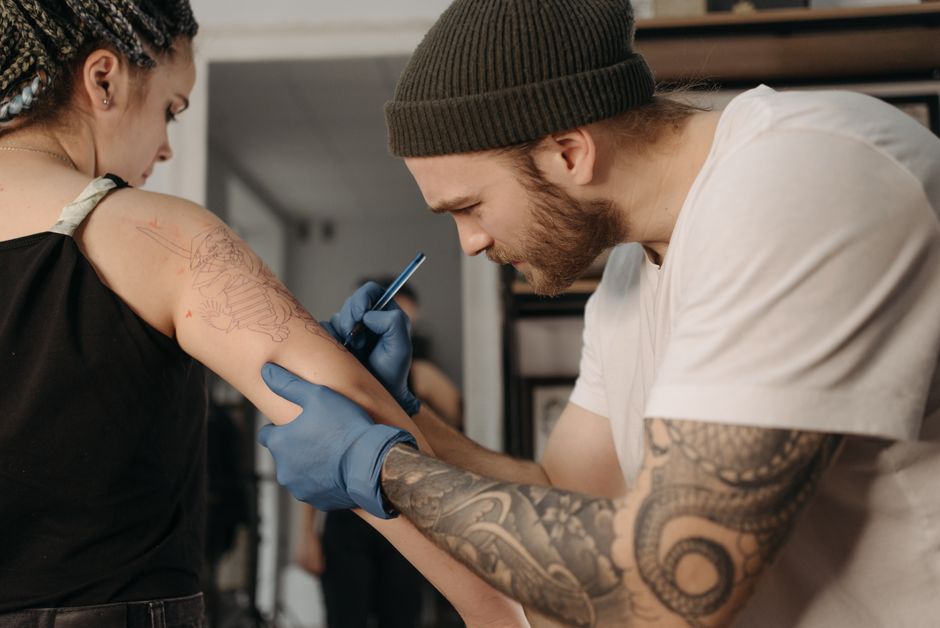
Tattooing is a hands-on craft. It takes supervised practice, real-time feedback and real client experience that a classroom can’t replicate.
A college course can teach color theory. It can’t teach you how skin responds under a needle or how to stay steady through a long session with a nervous client. Those lessons come from a Mentor beside you, correcting your hand as you work.
Clients and tattoo studios care about your portfolio and your skill, not your diploma. That’s why the tattoo apprenticeship has stayed the standard path for so long.
Tattooing is also hard to automate. Software can generate an image, but it can’t build trust with the person in your chair. We dig into that in our post on why Tattoo Artists are still essential.
How does a tattoo apprenticeship compare to a college degree?
A tattoo apprenticeship trains you directly for professional tattooing, usually in one to three years, without general education requirements or years of tuition.
Here’s how the two compare:
- Time: A bachelor’s degree usually takes four years. Ink Different’s Traditional Tattoo Apprenticeship takes 18 to 24 months.
- Cost: The College Board reports that average published tuition and fees for in-state students at public four-year colleges reached $11,950 in 2025-26. That’s per year, before housing and other costs.
- Focus: Every hour of a tattoo apprenticeship goes toward the skills your career requires.
- Outcome: You finish with a portfolio, real client experience and the training your state requires.
That’s why tattoo apprenticeships are gaining ground as a solid alternative to college. And the career can pay well. According to ZipRecruiter, the average Tattoo Artist in the United States earns $106,858 a year as of November 2026.
If you’re thinking about leaving another field, read why a tattoo apprenticeship is perfect for career changers starting over.
How do you become a tattoo artist without a degree?
Complete a structured tattoo apprenticeship, build a strong portfolio, finish your safety training and meet your state’s licensing requirements.
- Step 1: Build your foundation. Draw daily and practice fundamentals. Start with these tools every beginner Tattoo Artist should know.
- Step 2: Check your state’s rules. Find out whether your state requires an apprenticeship, approved school, training hours or registration.
- Step 3: Find structured training. Choose in-person training with experienced Mentors, not a weekend crash course.
- Step 4: Learn safety and sanitation. Complete bloodborne pathogens training and learn client aftercare, using guidance like the American Academy of Dermatology’s tips for caring for tattooed skin.
- Step 5: Practice under supervision. Move from synthetic skin to supervised client work with your Mentor guiding you.
- Step 6: Get licensed and build your brand. Meet your state’s requirements, then grow your presence with these platforms to help new and aspiring Tattoo Artists build their brand.
Before you start, review the mistakes aspiring tattoo apprentices should avoid.
Pro Tip: Make sure any tattoo apprenticeship you consider includes licensing support and in-person mentorship. Those two things separate a real career path from an expensive dead end.
What does the Ink Different Traditional Tattoo Apprenticeship offer?
Ink Different’s Traditional Tattoo Apprenticeship runs 18 to 24 months across four phases. It takes beginners from fundamentals to job-ready, with licensing support along the way.
You don’t need prior art experience or a degree. You need the drive to show up and do the work. For 15 years, we’ve trained beginners to become working Tattoo Artists.
- In-person training: Learn with a Mentor at one of 60+ tattoo studios nationwide.
- Four structured phases: Each phase builds on the last, from drawing fundamentals to supervised client work.
- Licensing support and a guaranteed job offer: You finish job-ready, with a guaranteed job offer at one of Ink Different’s own tattoo studios.
- Interest-free payment plans: Flexible payments make training more accessible.
- “Good Humans” culture: A family-like community that has your back.
Each Mentor takes just two tattoo apprentices per tattoo studio, so seats fill up quickly.
What is the Master Mentorship program?
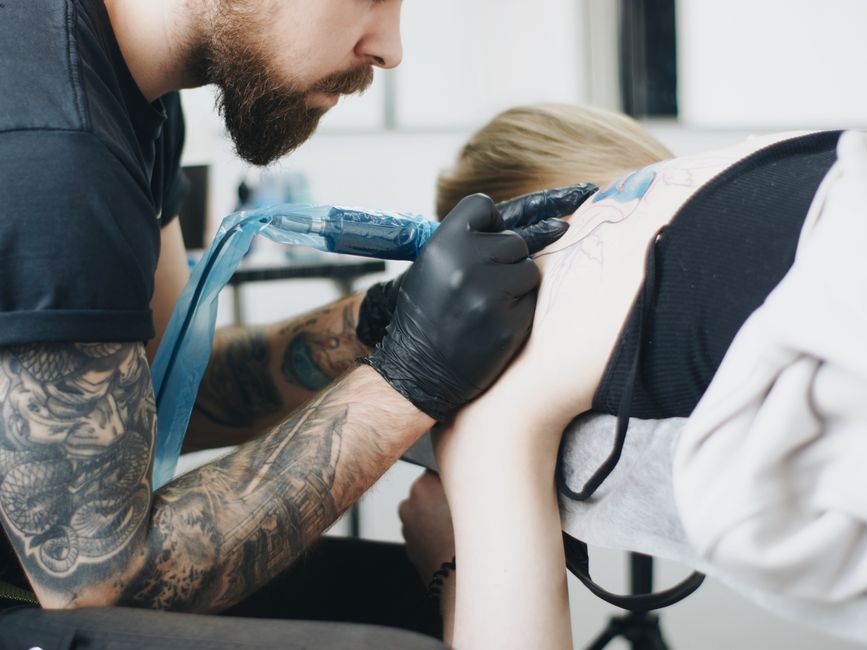
The Master Mentorship is one year of in-person training for beginners and experienced Tattoo Artists. You train alongside celebrity and award-winning Master Mentors to master a style, grow your career and build a business.
You’ll learn from Master Mentors like Al Fliction, Liz Cook, Kyle Dunbar, Boneface, Jordi Pla and Marcel Oliveira. It’s intensive, focused training you won’t find in a college classroom.
Is tattoo training available in Spanish?
Yes. Ink Different offers Spanish-speaking locations in Denver, Orange County, New York City, Miami, San Antonio and San Diego.
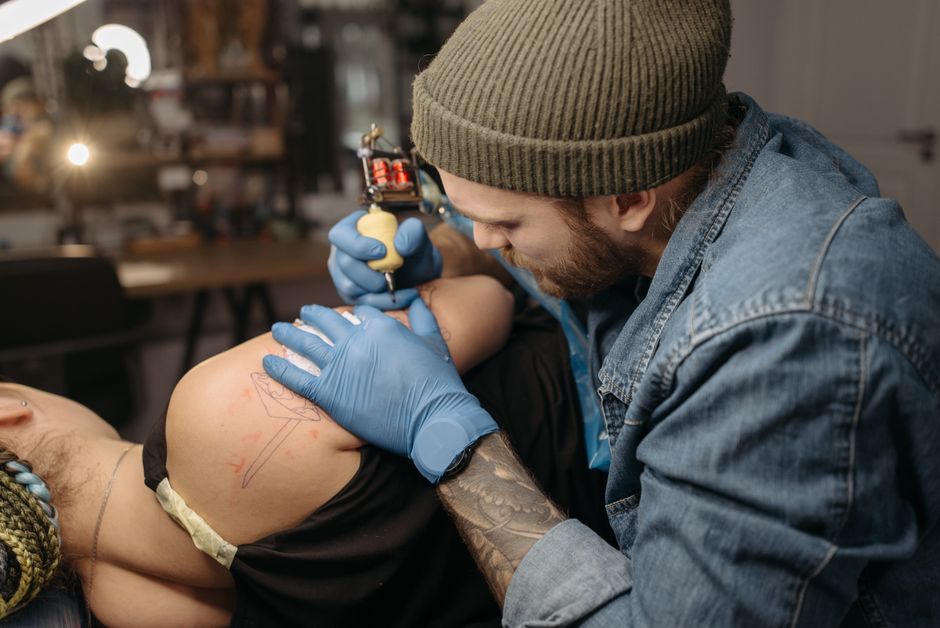
Ready to become a tattoo artist?
A college degree was never the requirement. What you need is hands-on training, safety certification and your state’s license or registration. A structured tattoo apprenticeship covers all three.
Ready to become a Tattoo Artist? Apply now to Ink Different’s Traditional Tattoo Apprenticeship and start building an AI-proof career with licensing support along the way.
Frequently Asked Questions
Do you need a degree to be a Tattoo Artist?
No. No college degree is required to tattoo professionally. You need hands-on training, bloodborne pathogens training and your state’s license or registration.
Do you have to go to school to be a Tattoo Artist?
In most states, no. Most Tattoo Artists train through a tattoo apprenticeship. A few states, like Oregon, run licensing through approved tattoo schools with set training hours.
Do I need a high school diploma to become a Tattoo Artist?
Requirements vary by state and tattoo studio. Many states set a minimum age of 18, and some tattoo studios prefer a diploma or GED, but it isn’t a universal requirement.
Do I need art experience to start a tattoo apprenticeship?
No. Ink Different’s Traditional Tattoo Apprenticeship is built for beginners and teaches drawing and technical fundamentals from day one.
How long does it take to become a Tattoo Artist?
Most tattoo apprenticeships take one to three years. Ink Different’s Traditional Tattoo Apprenticeship takes 18 to 24 months across four phases.
Is tattooing a stable career without a degree?
Tattooing is a hands-on craft that’s hard to automate, and ZipRecruiter reports an average Tattoo Artist salary of $106,858 a year. Pay varies widely with skill, reputation and location.
